Showing posts with label Plantagenet. Show all posts

Thursday, January 9, 2025

Book Spotlight: THE USURPER KING by Mercedes Rochelle - Book 4 of The Plantagenet Legacy


From Outlaw to Usurper, Henry Bolingbroke fought one rebellion after another.

First, he led his own uprising. Then he captured a forsaken king. Henry had no intention of taking the crown for himself; it was given to him by popular acclaim. Alas, it didn't take long to realize that that having the kingship was much less rewarding than striving for it. Only three months after his coronation, Henry IV had to face a rebellion led by Richard's disgruntled favorites. Repressive measures led to more discontent. His own supporters turned against him, demanding more than he could give. The haughty Percies precipitated the Battle of Shrewsbury which nearly cost him the throne—and his life.

To make matters worse, even after Richard II's funeral, the deposed monarch was rumored to be in Scotland, planning his return. The king just wouldn't stay down and malcontents wanted him back.


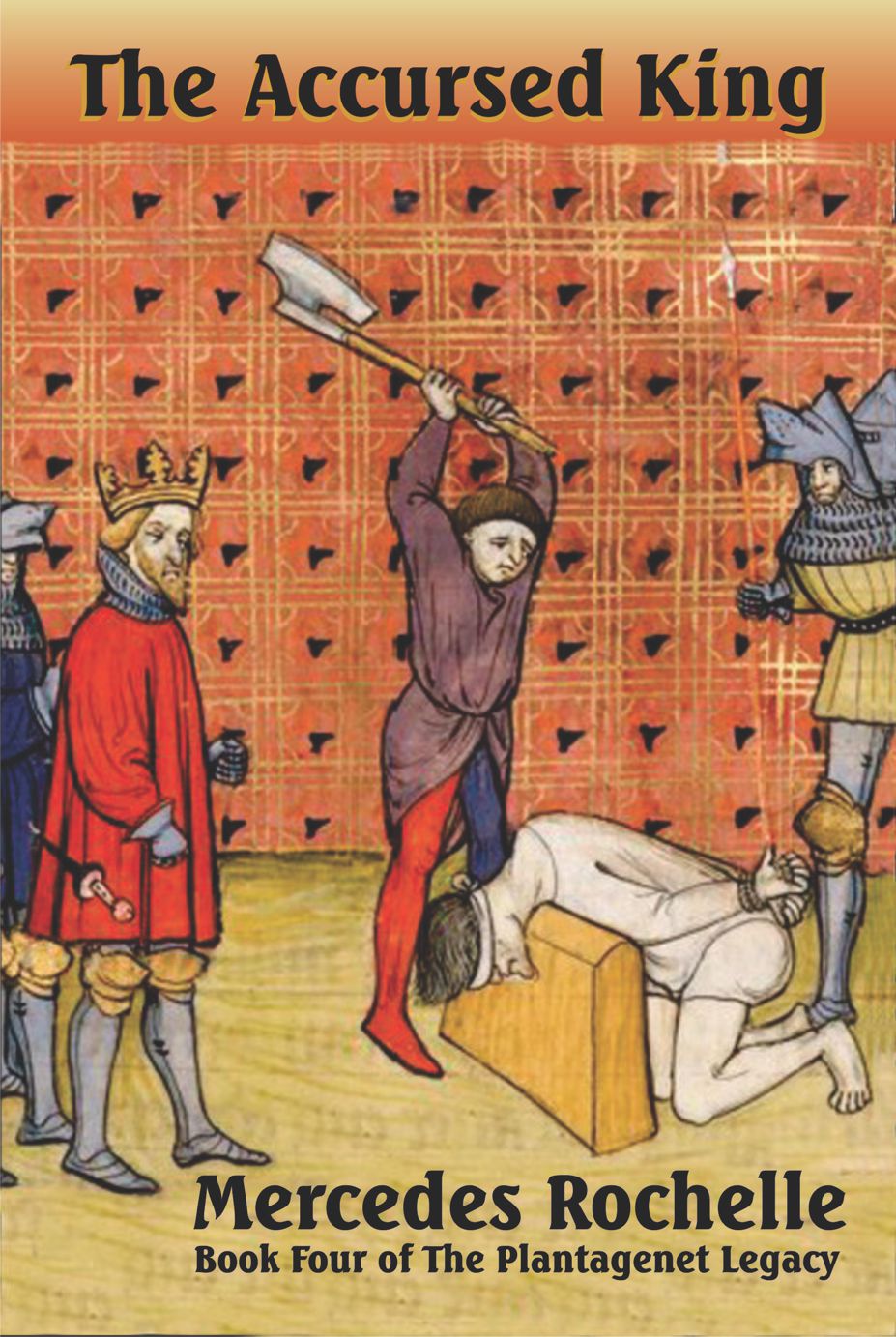
THE ACCURSED KING by Mercedes Rochelle

Book 5 of The Plantagenet Legacy

What happens when a king loses his prowess?

The day Henry IV could finally declare he had vanquished his enemies, he threw it all away with an infamous deed. No English king had executed an archbishop before. And divine judgment was quick to follow. Many thought he was struck with leprosy—God's greatest punishment for sinners. From that point on, Henry's health was cursed and he fought doggedly on as his body continued to betray him—reducing this once great warrior to an invalid.

Fortunately for England, his heir was ready and eager to take over. But Henry wasn't willing to relinquish what he had worked so hard to preserve. No one was going to take away his royal prerogative—not even Prince Hal. But Henry didn't count on Hal's dauntless nature, which threatened to tear the royal family apart.


Buy Links:


Universal Buy Links:

The Usurper King: https://books2read.com/u/3nkRJ9

 The Accursed King: https://books2read.com/u/b5KpnG

 The Plantagenet Legacy Series Links:

 Amazon US Series Link

 Amazon UK Series Link

 All titles in the series are available to read on #KindleUnlimited.


Mercedes Rochelle is an ardent lover of medieval history, and has channeled this interest into fiction writing. She believes that good Historical Fiction, or Faction as it's coming to be known, is an excellent way to introduce the subject to curious readers.

Her first four books cover eleventh-century Britain and events surrounding the Norman Conquest of England. Her new project is called “The Plantagenet Legacy” taking us through the reigns of the last true Plantagenet King, Richard II and his successors, Henry IV, Henry V and Henry VI. She also writes a blog: HistoricalBritainBlog.com to explore the history behind the story.

Born in St. Louis, MO, she received by BA in Literature at the University of Missouri St.Louis in 1979 then moved to New York in 1982 while in her mid-20s to "see the world". The search hasn't ended!

Today she lives in Sergeantsville, NJ with her husband in a log home they had built themselves.

Author Links:

Website: https://mercedesrochelle.com/ 

Twitter: https://x.com/authorrochelle

Facebook: https://www.facebook.com/mercedesrochelle.net

Book Bub:  https://www.bookbub.com/authors/mercedes-rochelle

Amazon Author Page:  https://www.amazon.com/stores/Mercedes-Rochelle/author/B001KMG5P6

Goodreads: https://www.goodreads.com/author/show/1696491.Mercedes_Rochelle


Tuesday, July 2, 2024

Book Spotlight: The Agincourt King by Mercedes Rochelle


From the day he was crowned, Henry V was determined to prove the legitimacy of his house. His father's usurpation weighed heavily on his mind. Only a grand gesture would capture the respect of his own countrymen and the rest of Europe. He would follow in his great-grandfather Edward III's footsteps, and recover lost territory in France.

Better yet, why not go for the crown? Poor, deranged Charles VI couldn't manage his own barons. The civil war between the Burgundians and Armagnacs was more of a threat to his country than the English, even after Henry laid siege to Harfleur. But once Harfleur had fallen, the French came to their senses and determined to block his path to Calais and destroy him.

By the time the English reached Agincourt, they were starving, exhausted, and easy pickings. Or so the French thought. Little did they reckon on Henry's leadership and the stout-hearted English archers who proved, once again, that numbers didn't matter when God was on their side.


Buy Links:

This title is available to read on #KindleUnlimited.

Universal Buy Link: https://books2read.com/u/mq70Ze


Mercedes Rochelle is an ardent lover of medieval history, and has channeled this interest into fiction writing. Her first four books cover eleventh-century Britain and events surrounding the Norman Conquest of England. The next series is called “The Plantagenet Legacy” and begins with the reign of Richard II.

She also writes a blog: www.HistoricalBritainBlog.com to explore the history behind the story. Born in St. Louis, MO, she received by BA in Literature at the Univ. of Missouri St.Louis in 1979 then moved to New York in 1982 while in her mid-20s to "see the world". The search hasn't ended!

Today she lives in Sergeantsville, NJ with her husband in a log home they had built themselves.

 Author Links:

 Website: https://mercedesrochelle.com/

Blog:  https://historicalbritainblog.com/

Twitter / X: https://x.com/authorrochelle

Facebook:  https://www.facebook.com/mercedesrochelle.net

Book Bub: https://www.bookbub.com/authors/mercedes-rochelle

Amazon Author Page:  https://www.amazon.com/stores/Mercedes-Rochelle/author/B001KMG5P6

Goodreads: https://www.goodreads.com/author/show/1696491.Mercedes_Rochelle


Tuesday, June 7, 2022

Book Spotlight: The Accursed King (The Plantagenet Legacy Book 4) by Mercedes Rochelle


What happens when a king loses his prowess? The day Henry IV could finally declare he had vanquished his enemies, he threw it all away with an infamous deed. No English king had executed an archbishop before. And divine judgment was quick to follow. Many thought he was struck with leprosy—God's greatest punishment for sinners. From that point on, Henry's health was cursed and he fought doggedly on as his body continued to betray him—reducing this once great warrior to an invalid. Fortunately for England, his heir was ready and eager to take over. But Henry wasn't willing to relinquish what he had worked so hard to preserve. No one was going to take away his royal prerogative—not even Prince Hal. But Henry didn't count on Hal's dauntless nature, which threatened to tear the royal family apart.


 Buy Links:

 This book is free to read with a #KindleUnlimited subscription.

 Amazon UK   Amazon US   Amazon CA   Amazon AU


Series Links:

A King Under Siege (Book 1): https://books2read.com/u/mKdzpV

The King’s Retribution (Book 2): https://books2read.com/u/mBzGwA

The Usurper King (Book 3): https://books2read.com/u/b6RZMW

The Accursed King (Book 4): https://books2read.com/u/3RLxZL


Mercedes Rochelle

Mercedes Rochelle is an ardent lover of medieval history, and has channeled this interest into fiction writing. Her first four books cover eleventh-century Britain and events surrounding the Norman Conquest of England. The next series is called The Plantagenet Legacy, about the struggles and abdication of Richard II, leading to the troubled reigns of the Lancastrian Kings. She also writes a blog: HistoricalBritainBlog.com, to explore the history behind the story. Born in St. Louis, MO, she received a  BA in Literature at the Univ. of Missouri St.Louis in 1979, then moved to New York in 1982 while in her mid-20s to see the world.” The search hasnt ended! Today she lives in Sergeantsville, NJ, with her husband in a log home they had built themselves.

 Social Media Links:

 Website   Twitter   Facebook   BookBub   Amazon Author Page   Goodreads


Thursday, February 3, 2022

Book Spotlight and Excerpt: A King Under Siege (The Plantagenet Legacy, Book 1) by Mercedes Rochelle


Richard II found himself under siege not once, but twice in his minority. Crowned king at age ten, he was only fourteen when the Peasants' Revolt terrorized London. But he proved himself every bit the Plantagenet successor, facing Wat Tyler and the rebels when all seemed lost. Alas, his triumph was short-lived, and for the next ten years, he struggled to assert himself against his uncles and increasingly hostile nobles. Just like in the days of his great-grandfather Edward II, vengeful magnates strove to separate him from his friends and advisors, and even threatened to depose him if he refused to do their bidding. The Lords Appellant, as they came to be known, purged the royal household with the help of the Merciless Parliament. They murdered his closest allies, leaving the King alone and defenseless. He would never forget his humiliation at the hands of his subjects. Richard's inability to protect his adherents would haunt him for the rest of his life, and he vowed that next time, retribution would be his.


Buy Links

Universal Link

Audio Narrated by Kevin E. Green

 ¸.•*´¨) ¸.•*¨) ( ¸.•´

EXCERPT

Richard and his retainers sat astride their horses while Walworth crossed the distance between the two groups, stopping just outside of rock-throwing range. He wasted no time.

"Wat Tyler," he bellowed. "The king commands you to present yourself and submit your petitions in person." Wheeling his horse around, the mayor trotted back to the royal party.

The rebel leader was standing in the second rank, and he puffed his chest out when his name was called. "Imagine that," he boasted to his neighbors. "The king calls me by name." He couldn't stop himself from bouncing up and down in excitement. "Look at them, cowering over there like so many sheep. They know we are the rulers of this city." He stepped out and gestured for someone to bring his horse. "What say you, lads? Shall I go and address the king?"

"Yes, Yes!" the rebels clamored their support.  Wat mounted his hackney and rode into the open field, accompanied by a single follower carrying the king's banner given them the day before. He glanced up at the sky, wanting to remember this moment. The horizon was slightly hazy in places from the smoke of burning buildings. The sun warmed his back; his followers cheered him on. Today, Wat Tyler would make his mark as England's champion. Across the square, the king waited for him. For him alone. He rode right up to the unsympathetic lords and quickly dismounted. Just as quickly he bowed, then seized Richard's hand and roughly shook it, to the astonishment of everyone.

"Be of good cheer," Wat declared. "For you shall have, in a fortnight, forty thousand more commons than you see right now, and we shall be good companions."

Richard suppressed a shudder. Pulling his hand away, he asked, "Why haven't you gone home, since I gave you what you asked for?"

All elation fled. This wasn't what he wanted at all. "Upon my soul, I will not go home. Not until we have a charter more to our liking." He unsheathed his dagger and pointed it up as though to emphasize his declaration. "There are many different points that need clarifying. And if you don't you will bitterly rue the day you opposed the commons of England!"

Sitting behind the king, Robert de Vere grunted in anger. But Richard held up a hand, silencing him. "And what points are these you need clarifying?"

Wat started tossing his knife from one hand to the other. Back and forth the knife went, while he proclaimed each carefully rehearsed statement. "Well, sire. It's like this. First, we demand that all game laws be abolished. Every man should be able to hunt his own food without worrying about getting killed, trying to feed his family. Secondly, there should be no outlawry in any process of the law." He paused, waiting for a response but none was forthcoming. Again. Wat took this as encouragement, resuming his knife toss. "Thirdly, the goods of the Holy Church should no longer remain in the hands of the religious. Let the clergy have sufficiency to support them, but let the rest of their goods be divided among the people of the parish. Lastly, we demand that there should be no more lordships. All the lands should be divided among the people, except what belongs to the king. There should be no more villeinage and no more serfdom, but all men should be free and of one condition." He stopped, wiping his forehead.

Richard nodded briefly. "You shall have all that I can legally grant, saving the regality of my crown. Now go. Go back to your own home."

The king and his men sat unmoving on their horses. Not another word was said. Even the rebels had quieted down, though they were too far away to hear any speeches. Wat stared at the king; this was not going right.

Jerking his shoulders, he turned around. "Water," he shouted to his follower. "Bring me water." He stared at the king while he waited, then held out his free hand as he heard someone run up behind him. He took a deep draught from a jug, swished it around his mouth, and spat on the ground in front of Richard's horse. The animal stepped away but Richard nudged it back into place. The king held up a warning hand once again. He waited. He could tell that Wat was losing his self-control.

"Ale," shouted Tyler. "Bring me ale!" Once again he waited; once again he quaffed the contents in one long gulp. Handing the mug to his companion, he remounted his horse, turning his back on the king.

"You are a common thief and a liar," someone shouted.

Wat spun around. "What! Is that you John?" he growled, recognizing the voice of Sir John Newton, his old captive from Rochester. "Come out here." He shook his dagger threateningly.

"I will not! You are naught but a knave and unworthy of my sword!"

Wat couldn't believe that his authority was slipping away so fast. "By my faith," he hollered, "I shall never eat meat again till I have your head!" Blinded with rage, he pushed his horse into the royal entourage, intent on striking his challenger.

But Mayor Walworth expected something of the sort. "False stinking rascal," he shouted, and interposed his own horse between Wat and Newton. "I arrest you for drawing your blade in front of the king's face!"

Momentarily distracted, Wat swung around and thrust his dagger at the mayor's stomach—only to see it turned aside. The steel breastplate had done its job. He struggled to disentangle his blade from the fabric, but Walworth was faster; he drew a short sword and slashed it down on Tyler's shoulder, driving him onto his horse's neck. One of Richard's squires plunged his sword twice into Wat's side.

The rebel leader was incapacitated but he had enough energy to pull out of the crush. "Treason!" he cried, urging his mount toward his followers. The horse took a few running steps but slowed to a stop and Wat slipped out of his saddle, hitting the ground with a thud.

Nobody moved. From across the field, a groan went up, rising in volume as though the heart was rent from thousands of breasts. Louder and louder the cries grew until shrieks of rage shook the multitude. "Our captain is dead! Our leader has been killed!" Many of them reached for their arrows and bent their bows, intent on slaughtering everybody they could reach.

As soon as Walworth had dealt his blow, he turned his horse and charged away from the king directly toward the city. Richard's followers were in a panic; everything was happening too fast. They broke their close-knit ranks; a number of them followed the mayor. Others milled around the king when, without notice, Richard spurred his horse and galloped across the field toward the rabble.

"Men," he shouted. "What aileth you? Ye shall have no captain but me. I am your king! I will be your leader. Follow me into the fields without!" He pointed north to Clerkenwell and slowed his horse to a walk.

Bewildered, they hesitated, gawking at each other. All of a sudden, everything had changed for the worse. From the beginning, they had claimed their support for the king, and now the king commanded them to follow. What else could they do? The rebels lowered their weapons and obeyed for lack of better leadership. Still standing in a semblance of battle order, they kept their formation as one and followed Richard toward the fields around Clerkenwell.


Mercedes Rochelle 

Mercedes Rochelle is an ardent lover of medieval history and has channeled this interest into fiction writing. Her first four books cover eleventh-century Britain and events surrounding the Norman Conquest of England. The next series is called The Plantagenet Legacy about the struggles and abdication of Richard II, leading to the troubled reigns of the Lancastrian Kings. She also writes a blog: HistoricalBritainBlog.com to explore the history behind the story. Born in St. Louis, MO, she received a  BA in Literature at the Univ. of Missouri St.Louis in 1979 then moved to New York in 1982 while in her mid-20s to “see the world”. The search hasn’t ended! Today she lives in Sergeantsville, NJ with her husband in a log home they had built themselves.

 Social Media Links

 Website   Twitter   Facebook   Bookbub   Amazon Author Page   Goodreads


Saturday, January 1, 2022

THE HISTORY GALS: Tavern Talk - Richard III - Guilty or Innocent? by Mary Ann Bernal and Vivienne Brereton

Following the adventures of Jen and Lucy

Jen Hailing from New York City
Lucy Hailing from the Cotswolds


Lucinda and her friend, Jennifer, visiting from New York City, are on the first day of their stay in Leicester. They are both members of an international Richard III Society and have become firm friends online – now thrilled to finally meet in person.

Jennifer has meticulously written a timetable for them, but by 6 p.m., Lucinda is secretly on the point of collapse; clearly, her once-weekly gentle Pilates with the girls isn’t enough to match Jennifer’s boot camp level of fitness. She also isn’t used to getting up at 5:30, but Jennifer convinced her they should arrive at Bosworth Field before the crowds. Back in the city, a patient curator has just gently ushered them out of the King Richard III Visitor Centre at closing time.


“See you tomorrow at nine, Jen,” she calls after them, giving a friendly wave.


Lucinda has noticed that everyone seems to like Jennifer; it’s certainly very hard not to be charmed by her new American friend.

 ******


“Perhaps the museum with Richard’s original sword is still open,” Jennifer says with unflagging enthusiasm. “I can’t wait to ask if I can hold it.”


Slightly appalled at the idea, Lucinda puts one hand to her forehead. “I’m a tiny bit tired. Would you mind if we stopped for a drink?”


“What a great idea!” beams the American, darting into the nearby King Richard Arms before Lucinda can stop her. She was thinking more of a quiet pre-dinner G and T back at The Hilton, maybe a long soak in the bath. As they walk into the darkened pub, they immediately spot a man and a woman dressed in medieval garb enjoying a pint.


Jennifer grabs Lucinda’s arm. “Lucy, look, we need to get a picture of those two! Maybe, they’ll agree to a selfie?” She goes quite pink, obviously excited at the prospect.


Lucinda has given up asking Jennifer not to shorten her name. “Um, yes, but they do look rather engrossed in deep conversation – perhaps later; let’s not get too touristy, you promised!”


Jennifer laughs good-naturedly. “Yes, I did, didn’t I? No worries, I won’t embarrass you. But re-enactors are used to adoration from their fans, especially tourists!”


“Let’s order first,” Lucinda says, flagging down a passing barmaid and rather grandly asking for a bottle of their best champagne.


“Come, let’s sit near them,” Jennifer insists, dragging Lucinda to a nearby table.


Jennifer is taking in the quaint atmosphere, observing architecture from earlier times that has survived the passage of time. She chooses the seat closest to the couple who appear to be having a heated conversation.


Tis a shame what they’re saying about His Grace, God rest his soul,” the woman says while crossing herself. “And people are agreeing! It is not right, I tell you!”

Lucinda thinks it’s very bad manners for actors to be practicing their lines in public. She can’t imagine such a thing happening at The National in London.

 “Lower your voice,” the man in costume replies. “The king has spies everywhere.”

The Tudor upstart is not our king! It’s his mother’s doing that brought him here! Devout and pious, my foot! She’s a scheming charlatan, that one! Don’t be fooled by her lies! And that husband of hers is no better! The true king died in battle because of his betrayal! I can only imagine the pain Richard felt when he saw Stanley’s army fighting against him. There is no justice!”


You speak treason.”


I speak the truth!”

Lucinda is debating whether to ask them to keep their voices down when Jennifer leans over, and whispers in her ear – “They are really in character, aren’t they? We have to find out where they’re performing.”

At that moment, the door of the pub flies open. Two soldiers dressed in medieval garb and wearing Henry VII’s badge walk in. With hands on the pommels of their swords, they look around the room.

We have to leave,” the man says, glancing at the door. 

They are not looking for us,” the woman tells him.

We can’t chance it,” the man says as he pulls her out of her seat.

Jennifer is transfixed to see the fear in the woman’s eyes before turning her head back to the men. 

“Lucy, look! Those men – wow, don’t they look menacing?  Do you think they’ll take a picture with me? OMG, this is so exciting. We might be participating in a skit. You know, like those murder mystery dinners where the cast interacts with the audience. This is so cool.”

Jennifer dives into her purse to get her phone, hoping to take some authentic action shots, but by the time she turns around, the couple has vanished along with the king’s soldiers. “Where did they go?”

“Probably out through the rear entrance,” Lucinda replies, grateful to see the back of them. Now she can enjoy her champagne in peace. 

“I don’t see a back door. Now that is weird. What if we stumbled into the past somehow? That would explain us witnessing a moment in time – like a portal opening or something.”

“You Americans watch far too much television.”

“Then what is your explanation for them vanishing – poof! – just like that. I bet if we ask the barkeeper, he’ll deny seeing anything strange or out of the ordinary. It’s typical of that Brit stiff upper lip thing you have going where you say nothing about feelings or anything weird.”

“Jennifer, I think they just left – you missed the football crowd coming in a little while ago; that’s when they walked out of the door, I am sure.”

“Since we both saw them, suffice it to say they were there, and we did overhear the conversation. Let’s just toss it up to too much of the bubbly. But I assumed they were talking about Richard III and Henry VII. And the woman was right. Henry VII did not deserve to be king. Shakespeare did a great disservice to Richard’s memory. The same with Thomas More. Look who ruled while they were writing about Richard – the Tudors! Of course, they wouldn’t tell the truth. They’d be dead if they did! And if Shakespeare were alive today, he’d be sued for defamation of character. A good lawyer would have a field day in court – and it would be broadcast on CNN!” 

Lucinda reaches out for a menu. “You have to remember there are a lot of opinionated people here in the U.K. who are convinced of Richard’s guilt.”

“Oh, because they believe the fake news about the Princes in the Tower?”

Lucinda laughs. “I do love your passion. Let’s order some food to keep us going.”

“In mock trials in the U.S. and I believe here in the UK, Richard was acquitted. Hearsay and circumstantial evidence create reasonable doubt. Besides, I think our pious Margaret Beaufort orchestrated everything.”

Lucinda is impressed by her clever friend’s knowledge and liked the idea of an American-style courtroom drama. “How about we compare notes? The pros and cons for guilt or innocence,” she suggests, getting into the spirit of things. This American friend of hers was so different from her other ones. Much more fun a lot of the time, wearing her heart on her sleeve.

“Great idea! How about starting with the obvious fake news – like being two years in his mother’s womb. Seriously?  But then people have believed ridiculous headlines throughout the centuries – the one with a political candidate running a sex trafficking ring out of a pizza shop back in D.C. comes to mind. So, it’s not just your lot not thinking straight.”

Lucinda nods in agreement. “You’re right. Shakespeare wrote for dramatic effect. However, his skeleton has proven that Richard did have a mild form of scoliosis, but he certainly wasn’t the hunchback of popular folklore. He’s been accused of terrible crimes, but he was actually very brave charging into the thick of the battle.”

I agree, he was braver than most, kings included, but the nitty-gritty is with the princes in the Tower. What happened to them? They disappeared just like our couple with the soldiers,” Jennifer starts to laugh.

Lucinda smiles back. “But we can’t escape the fact that Richard did have motive and means. I read somewhere that the powerful Howards could have been involved with helping Richard. Just after little Edward V was taken to the Tower, John Howard ordered two sacks of lime.”

“Oh, I didn’t know that. But for sure, they were up to no good.”


“Who knows? The father and son were made Duke of Norfolk and Earl of Surrey just days into Richard’s reign.”


“I can see why that would be suspicious. But speaking of motive and means, Henry and his mother definitely had it. So did the Duke of Buckingham – what was his name?”

“Henry Stafford.”

Jennifer nods. “Ah, yes, another Henry.”


“My grandfather always used to say ‘never back a man who changes horses mid-race.’ Like Buckingham did when he switched from Richard to Margaret and Henry. No wonder Richard had him executed.”


He chose poorly,” Jennifer laughed, remembering the line from Indiana Jones, wondering if Lucy had seen the movie, then realizing she hadn’t when she didn’t react as one might expect. “In my opinion, Richard had no reason to get rid of his nephews. They were declared illegitimate; besides, Richard was already king. However, as the saying goes, the buck stops here – Richard was King, ergo, he has to take responsibility for their disappearance.”

Lucinda shakes her head. “That doesn’t seem fair at all. To be accused of a crime you didn’t commit, just because you’re in charge.”

But life isn’t fair. And let’s not forget Elizabeth Woodville, the boys’ mother. If she suspected Richard of murderous intent, she never would have allowed them to be housed in the Tower. Score a point for Richard!”

“That’s exactly what I’ve always thought too. I would never have allowed my Toby or Rupert to go anywhere near such a man when they were little. And when they did the reconstruction of Richard, he had such a pleasant face. A thoroughly nice young man of thirty-two. Not a monster at all.”

Monster-maker Shakespeare filled the seats. That’s all he cared about. People aren’t interested in the truth. They want drama; who cares about the lies – remember the gladiators of Ancient Rome – blood, and gore to satisfy the unruly spectators! But I am digressing. Margaret Beaufort had everything to lose. You know my views here, but I will add she included Henry in the conspiracy. The perks associated with wearing a crown are very tempting – money and power – the guy was not stupid – you will never convince me he was ignorant of his mother’s plotting. And don’t forget, with Richard dead, Edward’s son gets the crown, not Henry. Henry couldn’t let them live. Don’t you find it interesting that Henry never mentions the princes – like show the kids or the bodies – it was as if they never existed. And we can throw Buckingham into the mix. There you have it – the trifecta of guilty suspects. I rest my case.”

Lucinda raises her glass. “If I were on a jury and you were the prosecuting Queen’s Counsel, you’d convince me to send them all down.”

Their serious discussion is briefly interrupted by the barmaid placing enormous plates of food in front of them.” 

“I do love Yorkshire Pudding,” Jennifer says, her eyes lighting up as she gazes down at her plate. “Enjoy,” she says to Lucinda, picking up her fork.

Bon appetit,” replies Lucinda, seriously envious of Jennifer’s impressive roast beef dinner and secretly wishing she’d hadn’t opted for the far more virtuous poached sole, new potatoes with steamed kale and beetroot. None of her other friends would ever dare order such a calorific meal as Jennifer, but she seems oblivious. The sautéed mushrooms and oven crisp roast potatoes look so much more appetizing than the minuscule new potatoes on Lucinda’s own plate. And that Yorkshire Pudding is the biggest she’s ever seen! She hopes that at least she can persuade Jennifer to swap her mangetout for the little pot of mushy peas she’s been given. Her husband, Giles, is most disparaging about them and thinks they should have remained where they were in a fish and chip shop. Perhaps Jennifer has never tried them?


“I’m really not into peas,” Jennifer says, pushing the dish towards her friend after noticing the look on Lucy’s face. “I take it you don’t like mushy peas either.”

“They’re an acquired taste, one I’ve never managed, I’m afraid.”

Lucinda’s mouth is watering as she watches Jennifer spear a juicy-looking roast potato. “Now, remember to save room for the sticky toffee pudding.”

“I prefer the apple cobbler or crumble, as you call it here. But do you think they’ll serve it with a scoop of vanilla ice cream instead of clotted cream – that’s not really my thing.”

Lucinda desperately tries to keep her eyes averted from Jennifer’s plate as she pops a piece of bland fish into her mouth, followed by a particularly tough strand of the rather bitter kale. “I am sure they will.”


“This must be the best roast beef dinner I’ve ever tasted, Lucy! I love the mushrooms and even the potatoes. As for the Yorkshire Pudding – oh, to die for! How’s your fish?”


“Delightful,” lies Lucinda, silently dreaming of sticky toffee pudding.


“Why not try some of my roast beef? I’d rather see you enjoy these tasty morsels than ask for a doggie bag. I’m assuming they give doggie bags.” Lucinda starts to put her hand up in protest, but Jennifer quickly drops two beef strips onto her plate. “I insist.”


Jennifer’s thoughtfulness touches Lucinda as she picks up a strip of what turns out to be the most perfectly roasted joint of beef. Maybe having one’s name shortened isn’t such a bad thing after all. “You are right, Jen; the beef is a far better choice.”


“It’s so much fun trying to solve a real whodunit while enjoying good food with such a great friend. Perhaps that couple was sent here for us to reopen the case against Richard III, proving his innocence, once and for all. We could rewrite the history books!”

“Not an easy feat,” Lucinda smiles, clinking glasses. “A toast to our friendship and finding the truth, wherever it may take us.”

“Loyalty Binds Me!

“Loyaulté me Lie!” Here’s to our next adventure, Jen, wherever that may be.”

 ¸.•*´¨) ¸.•*¨) ( ¸.•´

 Follow the authors

 Vivienne Brereton

 Amazon Author Page    Twitter   Website

Mary Ann Bernal

 Amazon Author Page    Twitter    Website

Richard III

Source: Wikimedia


Tuesday, May 25, 2021

Book Spotlight and Excerpt: The Usurper King Series: The Plantagenet Legacy Book 3 by Mercedes Rochelle


From Outlaw to Usurper, Henry Bolingbroke fought one rebellion after another.

First, he led his own uprising. Gathering support the day he returned from exile, Henry marched across the country and vanquished the forsaken Richard II. Little did he realize that his problems were only just beginning. How does a usurper prove his legitimacy? What to do with the deposed king? Only three months after he took the crown, Henry IV had to face a rebellion led by Richard's disgruntled favorites. Worse yet, he was harassed by rumors of Richard's return to claim the throne. His own supporters were turning against him. How to control the overweening Percies, who were already demanding more than he could give? What to do with the rebellious Welsh? After only three years, the horrific Battle of Shrewsbury nearly cost him the throne—and his life. It didn't take long for Henry to discover that that having the kingship was much less rewarding than striving for it.


EXCERPT

Trouble is brewing between King Henry and the Percies over the Scottish prisoners

A troubled silence fell between father and son. But Hotspur wasn't finished. "You know Douglas surrendered to me personally, and by the laws of chivalry only I can ransom him. I refuse to betray his trust. Besides, the poor man hasn't recovered from his wounds. It would be agony for him to travel in his state."


"I'll grant you that," sighed Percy, sitting across from him. "Perhaps once I turn Murdoch over, that would appease the king."


"It's going to have to. I will not go."


This time, Hotspur refused to give in and Percy went to London with a large number of hostages. He presented himself at Westminster Hall for the 1402 Parliament, bringing his most prominent prisoners: Murdoch, Earl of Fife and son of the Scottish governor, Lord Montgomery, Sir William Graham, Sir Adam Forster, and three French knights. Announcing himself with a fanfare, Percy presented the hostages who knelt just inside the door, then again in the middle of the hall, and a third time in front of the enthroned Henry. They remained kneeling while the king stood, sweeping his eyes across their heads and settling on Percy. He was not smiling. Henry restrained himself, making assurances they had nothing to fear. They were taken fighting like brave soldiers and he would respect the laws of chivalry. Then he invited them to join him at dinner in the Painted Chamber.


It wasn't until later that the king confronted Percy in front of a much smaller batch of witnesses. Summoning the earl to his council chamber, Henry clearly blamed the father for the disobedience of the son. Dispensing with any formalities, the king went right to the point.


"Why is Harry not here? Where is Archibald Douglas?"


Of course, Percy was expecting a confrontation but his own frustration simmered close to the surface. He didn't know whether he was angrier at the king or his son. At the moment, it didn't matter.


"Sire, you can see they did not come."


"Yes, I can see. I want to know why."


"You'll have to ask my son. He will answer for himself."


"I'm asking you! Douglas has been the instigator of all our border troubles. I want him under lock and key." Henry caught himself clenching his fists.


"He is, I assure you. Harry takes personal responsibility for him."


"I demanded that he bring Douglas to London. He has no license to flout my commands."


Percy was nearing the end of his patience. "Sire, you forget. We are committed to our guardianship, but we have emptied our coffers in your service. The ransom money will help relieve our debt."


"I have paid you £60,000. What more do you want?"


That was too much. Stomping his foot on the ground, Percy let slip his restraint. "That is not true and you know it," he shouted. "You still owe us £20,000 in cash and bad tallies. And you wonder why Harry is upset."


It was Henry's turn to snap. "Haven't you been paying attention? Look what I've had to deal with!" He threw up his hands. "Two rebellions, back and forth from Scotland to Wales, piracy interfering with trade, expenses of the Calais garrison, the defense of Guyenne, protecting the southern coast against the French. My God, no wonder there is no money in the exchequer. I have paid you as much as I can and there is no more!"


Clearly, Percy was not concerned about Henry's problems. His voice lowered to a growl. "When you entered the kingdom you promised to rule according to your council. By now you have received large sums from the country, and yet you say you have nothing. God grant you better counsel!"


Henry was momentarily taken aback. He couldn't admit it, but all his life he had let someone else worry about finances. Money was always there to draw on when he needed it. The day he took the crown he was the wealthiest man in England. How did it disappear so quickly? He knew a large percentage of his expenses went to annuities—and these annuities had been granted without consulting his council. He had to; how else was he going to hold on to his supporters? At the same time, he needed to continue paying annuities to Richard's retainers and for the same reason.


He was about to say something when Percy bowed and backed from the room. Neither of them trusted himself to pursue an argument that would just end up with more bitterness, and Henry let him go. Besides, his real quarrel was with Hotspur.

Buy Links:

  Amazon UK   Amazon US


Mercedes Rochelle

Mercedes Rochelle is an ardent lover of medieval history and has channeled this interest into fiction writing. Her first four books cover eleventh-century Britain and events surrounding the Norman Conquest of England. The next series is called The Plantagenet Legacy about the struggles and abdication of Richard II, leading to the troubled reigns of the Lancastrian Kings. She also writes a blog: HistoricalBritainBlog.com to explore the history behind the story. Born in St. Louis, MO, she received a BA in Literature at the Univ. of Missouri St.Louis in 1979 then moved to New York in 1982 while in her mid-20s to “see the world”. The search hasn’t ended! Today she lives in Sergeantsville, NJ with her husband in a log home they had built themselves.

 Connect with Mercedes

Website   Blog   Facebook   Twitter   Book Bub   Amazon Author Page   Goodreads


Wednesday, January 17, 2018

Why Did the Wars of the Roses Start?


A watercolour recreation of the Wars of the Roses.

 What Caused the War?
In the simplest terms, the war began because Richard, Duke of York, believed he had a better claim to the throne than the man sitting on it, Henry VI.

 Ever since Henry II, the first Plantagenet, took power, Kings had been holding onto their crown by the skin of their teeth and not all of them succeeded. Edward II, for example, was ousted by his wife and replaced by his son Edward III, but at least this kept things in the family.

 Problems occurred in 1399 when Richard II was deposed by his cousin, Henry Bolingbroke who would go on to be the Henry IV. This created two competing lines of the family, both of which thought they had the rightful claim. On the one hand were the descendants of Henry IV – known as the Lancastrians – and on the other the heirs of Richard II. In the 1450s, the leader of this family was Richard of York and his followers would come to be known as the Yorkists.

 A Dodgy King However, all this dynastic arguing was something of a smokescreen. What really mattered were more practical issues and in particular the disappointing reign of Henry VI.


A portrait of the ailing Henry VI whose inability to rule effectively due to his illness contributed to the outbreak of the Wars of the Roses

 When he became king Henry was in an incredible position. Thanks to the military successes of his father, Henry V, he held vast swathes of France and was the only King of England to be crowned King of France and England. However it was not a title he could hold onto for long and over the course of his reign he gradually lost almost all England’s possessions in France.

 Finally, in 1453, defeat at the Battle of Castillion called an end to the hundred years war and left England with only Calais from all their French possessions.

 The nobles were not happy, but this was as nothing to Henry’s reaction. He had always had a fragile mind and in 1453 it broke. Historians believe he suffered from a condition known as catatonic Schizophrenia which would see him lapse into catatonic states for long periods of time.

 Battle for Power
 Henry’s weakness created two factions at court. One, led by the Duke of Gloucester and Richard, Duke of York favoured a more aggressive policy in the war, while the other led by the Dukes of Suffolk and Somerset favoured peace. They were supported by the Queen Margaret of Anjou who was rumoured to be having an affair with Somerset.

 With Henry in no fit state to rule, Richard was named Regent. Although he relinquished when Henry recovered it had given him a taste for power and this alerted Margaret. She sensed a threat from Richard and did everything she could to force him out of power.

 The two sides met in the Battle of St Albans. It was only a small skirmish, but it saw the death of the Duke of Somerset and several other Lancastrian noblemen. This created sons who were out for revenge and turned a dynastic struggle into an even more poisonous blood feud.

 Even then there were chances to turn back. The Act of Accord in 1460 named Richard heir, but there was no turning back. Margaret – perhaps grieving for Somerset – was determined to get her revenge on Richard. She would have it when he himself was killed in battle, but that only left his son Edward who was even more determined to get his revenge. The Wars of York and Lancaster had begun.

 By Tom Cropper
Tom is a freelance journalist who studied history at Essex University. His work can be found in many different publications focusing on business and politics.

Friday, March 10, 2017

Richard III's prayer book goes online … and is that a personal note?

Fox News


The personal prayer book of King Richard III — in which the English king likely scrawled a reminder of his birthday in his own hand — is now available to peruse online.

 Leicester Cathedral digitized Richard III's "Book of Hours" and published it on the church's website alongside an interactive interpretive text. The original manuscript is in Lambeth Palace Library and is too fragile for public display, according to the dean of Leicester Cathedral, the Very Rev. David Monteith.

 Richard III , who died in battle in 1485, was interred in Leicester Cathedral in 2015 after his body was discovered beneath a city council parking lot in Leicester. Born in 1452, Richard ruled England for only about two years. He ascended the throne in 1483 amid a cloud of suspicion: He had been declared regent for his nephew, the son of King Edward IV (Richard's brother). But in the aftermath of Edward IV's death, the old king's marriage was declared invalid and his children illegitimate, which meant the crown became Richard's. His two nephews were never seen publically again, leading to rumors that Richard III had them murdered. The fate of the so-called "Princes in the Tower" remains a mystery to this day.

 The mystery of Richard III's nephews, along with Shakespeare's rather unflattering tragedy "Richard III," gave the king something of an unsavory reputation. But he was beloved in his adopted hometown of York during his life, and many modern admirers argue that Shakespeare's portrayal was slander. (The playwright was operating in the era of the Tudors, political enemies of Richard III and his dynasty, and would have had an incentive to paint the defeated king as evil.)

 The prayer book shows a softer, devoted side of Richard. Medieval laypeople kept personal books of hours with devotions that they were supposed to perform at certain times of day. Richard's "Book of Hours" was not originally made for him, according to a scholarly text by Anne Sutton and Livia Visser-Fuchs accompanying the Leicester digitization. There were, however, additions likely added at the king's request, as well as one notation that Richard III probably made himself.

 The first addition was a prayer called the Collect of St. Ninian, a missionary who converted England's Southern Picts to Christianity. Richard apparently had a special devotion to this saint, as he declared St. Ninian's feast day to be a principal one for his college at Middleham, Sutton and Visser-Fuchs wrote.

 Another addition, in the same script, was "The prayer of Richard III," a long devotional that is often mistakenly believed to be written for the king; in fact, Sutton and Visser-Fuchs wrote, it was a common prayer of the time, slightly edited to include Richard's name. After the prayer was a litany, which does appear unique to the king, Sutton and Visser-Fuchs wrote. The litany has not been found elsewhere, they wrote, and features a supplicant asking for God's mercy and protection. Unfortunately, Sutton and Visser-Fuchs wrote, much of the original litany is missing, making it difficult to glean much about Richard III's personal preoccupations from the text. There are references to protection from heathens, they wrote, suggesting Richard III's interest in the Crusades. 

King's handwriting

Perhaps the most fascinating page of the Book of Hours for those wanting to know the man behind the monarch is the calendar page for October. Most of the calendar is standard, with lists of saints' days and notations about the length of day and night. There are a few edits, like a note that someone named Thomas Howard died unexpectedly on March 28, and that someone else died on Aug. 25.

 On Oct. 2, though, there is a note in handwriting found nowhere else in the book. In a heavy, sprawling hand, the inscription reads, "hac die natus erat Ricardus Rex Anglie tertius Apud Foderingay Anno domini mlccccliio."

 Translation? "On this day was born Richard III King of England A.D. 1452." The note must have been written after the king's coronation on July 6, 1483, "and probably by the King himself," Sutton and Visser-Fuchs wrote.

The page with the king's probable handwriting is on sheet 7v of the manuscript and can also be found in Figure 28 of Sutton and Visser-Fuchs' text.

 Original article on Live Science .