Showing posts with label Wars of the Roses. Show all posts

Monday, November 24, 2025

Book Spotlight: The Traitor’s Son by Wendy Johnson


Caught between a king and a kingmaker, young Richard Plantagenet knows he’ll have to choose...

1461: Richard Duke of York, King by Right, has been branded a traitor and slain by his Lancastrian foes. For his eight-year-old son—Richard Plantagenet—England has become a dangerous place.

As the boy grapples with grief and uncertainty, his elder brother, Edward, defeats the enemy and claims the throne. Dazzled by his glorious sibling, young Richard soon discovers that imperfections lurk beneath his brother's majestic façade. Enter Richard Neville, Earl of Warwick—cousin, tutor, luminary—whose life has given him everything but that which he truly craves: a son. A filial bond forms between man and boy as they fill the void in each other’s lives. Yet, when treachery tears their world asunder, Richard faces an agonizing dilemma: pledge allegiance to Edward—his blood brother and anointed king—or to Warwick, the father figure who has shaped his life and affections.

Painfully trapped between duty and devotion, Richard faces a grim reality: whatever he decides will mean a fight to the death.

In "The Traitor’s Son", Wendy Johnson weaves a tapestry of loyalty, love, and sacrifice against the backdrop of England's turbulent history. Through the eyes of a young Richard III, readers are transported into a world where every choice is fraught with peril, and the bonds of kinship are tested to their limits. 

Perfect for fans of Hilary Mantel, Annie Garthwaite and Sharon K. Penman.

Praise for The Traitor’s Son:

Exquisitely written. An evocative and thoughtful retelling of the early life of Richard III.

~ Philippa Langley, MBE

Sometimes the perfect use of the written word takes my breath away. Not very often but this book is it. A wonderful story written so beautifully that I shall not forget it for a long time. Everything to my mind is perfect. The language, the story, the pacing. Just wonderful.”

~ Kindle Customer, 5* Amazon Review

Wonderfully woven story of a young Richard III. Woven with a sure knowledge of the history and a realistic telling of a story about a young boy finding his way through tragedy and triumph, uncertainty and a legacy he cannot escape.

Brilliant debut which promises more and more.

~ Cris, 5* Amazon Review

I loved this novel, it was beautifully written, extremely atmospheric, the characters’ personalities came through perfectly, can’t wait for the next instalment.

~ Linda Hayward, 5* Amazon Review

Really enjoyed this book. Holds the reader enthralled from the first paragraph to the last. The next volume can't be released soon enough.

~ J.M. Henderson, 5* Amazon Review


 Buy Link:

 Universal Buy Link:    https://books2read.com/u/mdJqL5

 This title is available to read on #KindleUnlimited.


Wendy Johnson has a lifelong passion for medieval history, its people, and for bringing their incredible stories to life. Her specific areas of interest are the fifteenth century, the Wars of the Roses, and Richard III in particular. She enjoys narratives that immerse the reader in the past and tries faithfully to recreate the later Middle Ages within her own writing. She has contributed to a number of historical anthologies and was a runner-up in the Woman and Home Short Story Competition 2008.

Wendy is also a founder member of Philippa Langley’s Looking for Richard Project, which located the king’s lost grave in 2012. She co-authored Finding Richard III: the Official Account of Research by the Retrieval and Reburial Project in 2014, and in 2019 received the Richard III Society’s Robert Hamblin Award. 

THE TRAITOR’S SON, volume one in a Richard III trilogy, is Wendy’s debut novel and she is currently working on the sequel.

 Author Links:

 Author’s Page on Publisher’s Website: https://madeglobal.com/authors/wendy-johnson/

Facebook: https://www.facebook.com/p/Wendy-Johnson-Author-61558759768505/

Book Bub:  https://www.bookbub.com/authors/wendy-johnson-cf3f97f7-3a8e-46d9-8394-c5a08caa594d

Amazon Author Page: https://www.amazon.co.uk/stores/author/B0D14SQJP3

Goodreads: https://www.goodreads.com/book/show/208871994-the-traitor-s-son


Monday, July 28, 2025

Book Spotlight: Marguerite: Hell Hath No Fury! by Judith Arnopp


Marguerite: Queen of England

From the moment Henry VI's new queen, Marguerite of Anjou, sets foot on English soil she is despised by the English as a foreigner, and blamed for the failures of the hundred years war in France.

Her enemies impede her role as the king’s consort and when Henry sinks into apparent madness, her bid to become regent is rejected. Marguerite must fight, not only for her own position but to maintain Henry’s possession of the crown. 

The ambitious Duke, Richard of York, seizes control of the country, thrusting Marguerite aside and inflating the mutual hatred between the houses of York and Lancaster. But the queen refuses to relinquish power and fights determinedly for the rights of her son, Edward of Lancaster.

The long and bitter civil conflict, that has come to be known as the War of the Roses, commences.


 Buy Link:

 Universal Buy Link: https://mybook.to/mhhnf

This title is available to read on #KindleUnlimited.


A lifelong history enthusiast and avid reader, Judith holds a BA in English / Creative Writing and a Masters in Medieval Studies. She lives on the coast of West Wales where she writes both fiction and non-fiction. She is best known for her novels set in the Medieval and Tudor period, focussing on the perspective of historical women but recently she has written a trilogy from the perspective of Henry VIII himself.

Judith is also a founder member of a re-enactment group called The Fyne Companye of Cambria which is when and why she began to experiment with sewing historical garments. She now makes clothes and accessories both for the group and others. She is not a professionally trained sewer but through trial, error and determination has learned how to make authentic looking, if not strictly historically accurate clothing. A non-fiction book about Tudor clothing, How to Dress like a Tudor, was published in 2023 by Pen and Sword.

She runs a small seaside holiday let in Aberporth and when she has time for fun, likes to garden and restore antique doll’s houses. You can find her on most social media platforms.

Her novels include:

A Song of Sixpence: the story of Elizabeth of York

The Beaufort Chronicle: the life of Lady Margaret Beaufort (three book series)

The Henrician Chronicle: comprising of:

A Matter of Conscience: Henry VIII, the Aragon Years (Book One of The Henrician Chronicle)

A Matter of Faith: Henry VIII, the Days of the Phoenix (Book Two of The Henrician Chronicle)

A Matter of Time: Henry VIII, the Dying of the Light (Book Three of The Henrician Chronicle)

The Kiss of the Concubine: a story of Anne Boleyn

The Winchester Goose: at the court of Henry VIII

Intractable Heart: the story of Katheryn Parr

Sisters of Arden: on the Pilgrimage of Grace

The Heretic Wind: the life of Mary Tudor, Queen of England

Peaceweaver

The Forest Dwellers

The Song of Heledd

The Book of Thornhold

A Daughter of Warwick: the story of Anne Neville, Queen of Richard III

Marguerite: Hell Hath no Fury!

 Author Links:

 Website: http://www.judithmarnopp.com/

Blog: http://www.juditharnoppnovelist.blogspot.co.uk/

Twitter / X: https://twitter.com/JudithArnopp

Facebook: https://www.facebook.com/thetudorworldofjuditharnopp

Instagram: https://www.instagram.com/tudor_juditharnopp/

Threads: https://www.threads.net/@tudor_juditharnopp

Bluesky: https://bsky.app/profile/jarnopp.bsky.social

Pinterest: https://www.pinterest.co.uk/jarnopp/

Book Bub: https://www.bookbub.com/profile/judith-arnopp

Amazon Author Page: http://author.to/juditharnoppbooks

Goodreads: https://www.goodreads.com/author/show/4088659.Judith_Arnopp


Tuesday, June 7, 2022

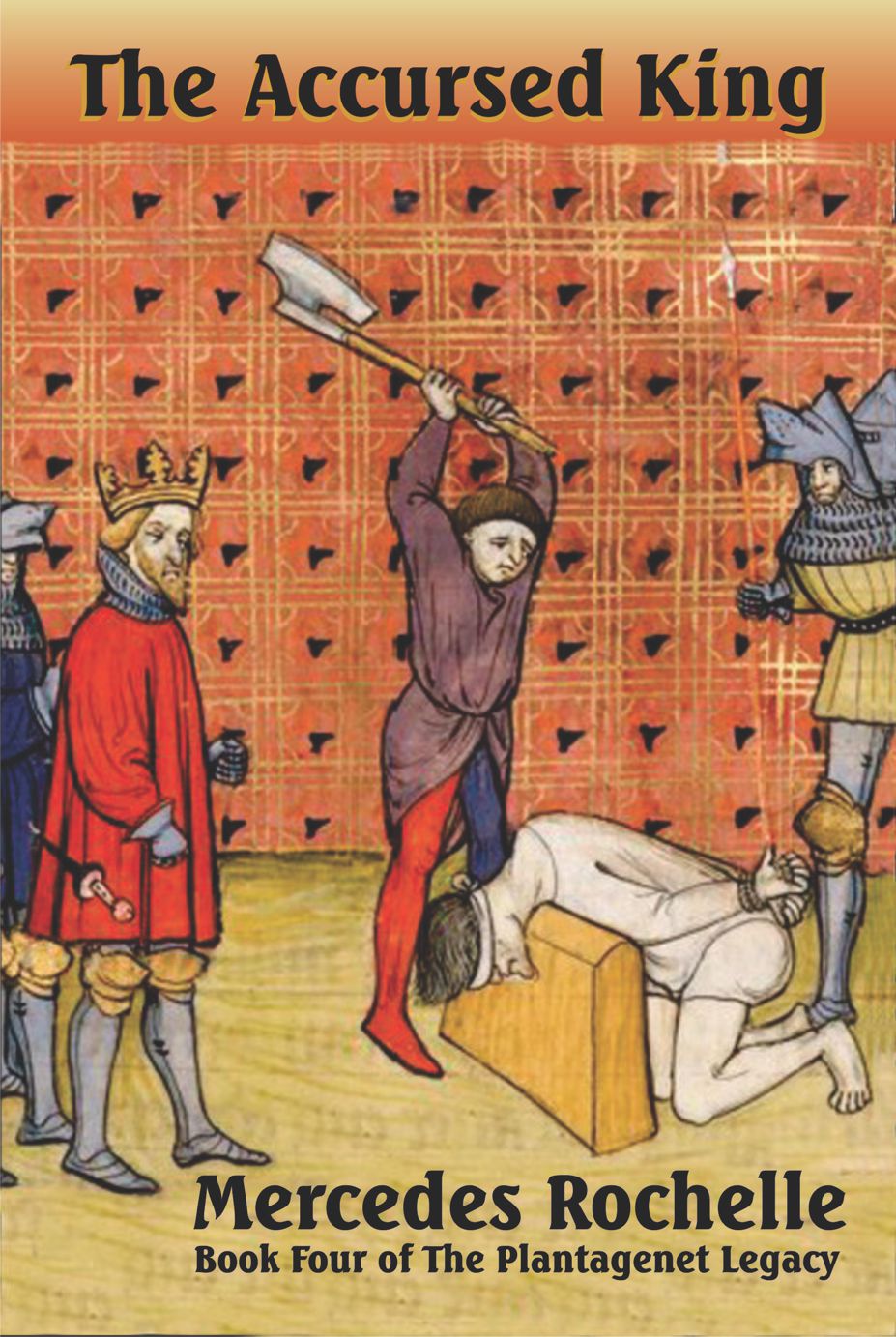
Book Spotlight: The Accursed King (The Plantagenet Legacy Book 4) by Mercedes Rochelle


What happens when a king loses his prowess? The day Henry IV could finally declare he had vanquished his enemies, he threw it all away with an infamous deed. No English king had executed an archbishop before. And divine judgment was quick to follow. Many thought he was struck with leprosy—God's greatest punishment for sinners. From that point on, Henry's health was cursed and he fought doggedly on as his body continued to betray him—reducing this once great warrior to an invalid. Fortunately for England, his heir was ready and eager to take over. But Henry wasn't willing to relinquish what he had worked so hard to preserve. No one was going to take away his royal prerogative—not even Prince Hal. But Henry didn't count on Hal's dauntless nature, which threatened to tear the royal family apart.


 Buy Links:

 This book is free to read with a #KindleUnlimited subscription.

 Amazon UK   Amazon US   Amazon CA   Amazon AU


Series Links:

A King Under Siege (Book 1): https://books2read.com/u/mKdzpV

The King’s Retribution (Book 2): https://books2read.com/u/mBzGwA

The Usurper King (Book 3): https://books2read.com/u/b6RZMW

The Accursed King (Book 4): https://books2read.com/u/3RLxZL


Mercedes Rochelle

Mercedes Rochelle is an ardent lover of medieval history, and has channeled this interest into fiction writing. Her first four books cover eleventh-century Britain and events surrounding the Norman Conquest of England. The next series is called The Plantagenet Legacy, about the struggles and abdication of Richard II, leading to the troubled reigns of the Lancastrian Kings. She also writes a blog: HistoricalBritainBlog.com, to explore the history behind the story. Born in St. Louis, MO, she received a  BA in Literature at the Univ. of Missouri St.Louis in 1979, then moved to New York in 1982 while in her mid-20s to see the world.” The search hasnt ended! Today she lives in Sergeantsville, NJ, with her husband in a log home they had built themselves.

 Social Media Links:

 Website   Twitter   Facebook   BookBub   Amazon Author Page   Goodreads


Sunday, January 2, 2022

THE HISTORY GALS: Daily Mail: Richard III may have been INNOCENT of ‘Princes in the Tower’ murders by Mary Ann Bernal and Vivienne Brereton

 Following the Adventures of Jen and Lucy

Jen Hailing from New York City
Lucy Hailing from the Cotswolds


Breaking News from the Daily Mail spreads ripples across the pond where Lucy’s favorite Anglophile is doing a happy dance after reading the article about Richard III. The ecstatic American has only recently returned from Britain but still has one foot remaining firmly in Leicester.

Replying to Lucy’s email, Jen’s nimble fingers can’t type fast enough, prompting a video call between them to discuss the latest development furthering Richard III’s cause.

Jen is sitting in front of her computer, her excitement evident to Lucy when making the connection.

“I told you Richard was a nice young man with a kind face and couldn’t possibly be guilty,” beams Lucy. “And how wonderful that a historian from Leicester University believes the younger prince, the King’s nephew, and namesake, little Richard of Shrewsbury, was returned to his mother and lived out his life in peace. What a happy ending!”

“Who would have thought proof about the King’s lack of involvement with the princes would come up so soon after we visited Bosworth Field,” Jen replies. “Have to love historians!”

“We certainly do,” nods Lucy, lifting a cup of Earl Grey to her lips. “I think Philippa Langley has done an absolutely splendid job with her Missing Princes Project. That shows real dedication.”

“But what about the Queen not letting the scientists examine those infamous bones found under the stairwell in the Tower. We have better technology since they were last examined. It’s a cover-up if you ask me.”

Lucy gives a guilty glance over at the two porcelain corgis in pride of place on the mantelpiece as if they can hear the blasphemous words. With Charles and Camilla living only a mile or so away at Highgrove, one never knew who might pop in. A lifelong royalist, Jen’s words feel almost treasonous, but she can’t help wholeheartedly agreeing. “I would like to know the Queen’s reasons, I must say.”

“Me, too. So, what do you think? Is this John Evans really Edward V?”

Lucy picks up an organic lemon biscuit from the Highgrove shop, deciding she can’t imagine Camilla baking them. “Well, I must admit, the arguments are very convincing. Especially his name starting with E for Edward and V for the fifth king. And AS for ‘asa’ in Latin, which means sanctuary. Someone certainly had a sense of humour.”

Jen looks thoughtful. “Probably Richard himself? To show the boys’ mother he was still honoring their royal status. After all, he must have been the one who originally came up with the plan.”

“It’s odd that there are only two other glass portraits of Edward V and one is in the royal window at Canterbury Cathedral. Why is there one in a rural church in Devon in the middle of nowhere? It doesn’t make sense.”

“No, it doesn’t.”

Lucy can’t help herself. “Oh, Jen, how I wish you were here now. I could take you for supper at the Snooty Fox. Wouldn’t it be fun to catch up with all this? I’ve been thinking how hard it must have been for the princes’ grieving mother to strike a bargain with her brother-in-law after the death of her beloved husband, King Edward.”

“I don’t think Elizabeth Woodville was easily swayed. She must have known in her heart that a Protectorship was extremely dangerous to her son’s well-being. Edward would never rule; he’d be taken prisoner or killed because he stood in the way. And Richard must have mentioned the battles destroying the Houses of York and Lancaster. The country needed peace, and Richard had proven himself in the north. He could govern wisely, and that’s what England needed, a strong leader. She had no choice but to trust her brother-in-law.”

“That makes sense, Jen. As a mother of two sons myself and looking back from our time, I, too, would think it was safer if Richard, as Edward’s surviving brother, and an adult, took over.”

“If that’s what happened, score a point for Richard. Unfortunately, when he was killed, Henry VII’s mother, that conniving Margaret Beaufort, decided to blacken Richard’s name, saying it was better for her son if everyone thought the princes were dead. So, Yorkist Richard became a murderous uncle and the devil incarnate. And Henry Tudor, an angel from heaven. The House of York to whom the new Queen belonged - vilified - and the new King’s House of Tudor - praised to the skies. What bull! Excuse my French.”

Lucy sighs. “Poor Elizabeth Woodville. She didn’t stand a chance against that schemer. There certainly wasn’t room at court for a Queen’s Mother as well as a King’s Mother. But galling as it is, Margaret Beaufort was probably right. If everyone thought the boys were dead, no one would come looking for them. And there could be no factions. Elizabeth’s daughter would be married off to Margaret’s son.”

“Yep. A win-win situation for everyone except for Richard! Of course, I also loved the DaVinci code reference in the article. So exciting. It reminded me a bit of Indiana Jones and “digging in the wrong place.” There were so many clues no one bothered to check. Why? Because they didn’t want the truth! Looking the other way kept them in power – yeah, I’m talking about the Tudor upstart and his mother. Too convenient if you ask me. And let’s not forget that cunning Margaret had the boys’ mother packed off to Bermondsey Abbey. I’m sure that wasn’t in the original deal with Richard. She was probably jealous that Elizabeth was still beautiful and a King of England had lost his heart to her, a commoner.”

Lucy suddenly thinks of the wonderful courtship between the Queen and Prince Philip portrayed in The Crown, and her eyes mist over. “Actually, I think their story is very romantic.”

“I agree. Edward and Elizabeth’s marriage is a storybook happy ending. On the other hand, I don’t think Margaret was ever truly in love. She seemed like such a cold fish, hiding behind piety! Yet, in all fairness, Margaret probably had no choice and made the best of a bad situation. But I still think she is as guilty as sin! Her fingerprints are over everything, including this deal if it ever existed.”

“Well, we’ve got a real mystery on our hands now. As good as any episode of Midsummer Murders.”

“I love John Nettles. And he always got his man.” Jen giggles. “The cops caught many criminals by following the money. With us, we follow the documents! As for Thomas More, he was only five when the princes in the Tower disappeared. He was nothing more than a Tudor puppet. Until the day arrived when he wasn’t.”

“You mean when he lost his head,” says Lucy in a solemn voice.

“Exactly. No one said no to Henry VIII and lived to tell the tale! So, anything More wrote about Richard was total hearsay, not admissible in a court of law.”

Lucy is full of admiration for her friend. “Didn’t you study law at university, Jen? You always seem to know so much. I met Giles right after I left boarding school. He was a few years older and persuaded me not to bother continuing with my studies. I had a place at Durham University to study history.”

Jen notices a fleeting sadness when looking directly into Lucy’s eyes. She isn’t sure she likes the sound of Giles, whom she suspects is overbearing and controlling. He probably didn’t want Lucy to go to college to prevent her from outgrowing their relationship and running off with someone else smarter than him! She wonders if he approves of Lucy’s passion for history. Almost certainly not. Jen is more determined than ever to help her friend pursue her hobby. “On my next trip over, we must visit Coldridge and St. Matthew’s church and check out the clues mentioned in the article. What do you think?”

Lucy claps her hands together. “Oh, yes, I’d love that. I can’t wait to visit the church and see all the clues Edward or, should I say, John Evans left there. Ones that will absolve his uncle of all guilt. I wonder what all the naysayers are thinking now. The ones who are so vocal about Richard III being guilty. Good King Richard! We’re riding to the rescue. Your name will soon be cleared.”

Read the Daily Mail article HERE

 ¸.•*´¨) ¸.•*¨)  ( ¸.•´

 Follow the authors

 Vivienne Brereton

 Amazon Author Page    Twitter   Website

Mary Ann Bernal

 Amazon Author Page    Twitter    Website


The Princes in the Tower


Saturday, January 1, 2022

THE HISTORY GALS: Tavern Talk - Richard III - Guilty or Innocent? by Mary Ann Bernal and Vivienne Brereton

Following the adventures of Jen and Lucy

Jen Hailing from New York City
Lucy Hailing from the Cotswolds


Lucinda and her friend, Jennifer, visiting from New York City, are on the first day of their stay in Leicester. They are both members of an international Richard III Society and have become firm friends online – now thrilled to finally meet in person.

Jennifer has meticulously written a timetable for them, but by 6 p.m., Lucinda is secretly on the point of collapse; clearly, her once-weekly gentle Pilates with the girls isn’t enough to match Jennifer’s boot camp level of fitness. She also isn’t used to getting up at 5:30, but Jennifer convinced her they should arrive at Bosworth Field before the crowds. Back in the city, a patient curator has just gently ushered them out of the King Richard III Visitor Centre at closing time.


“See you tomorrow at nine, Jen,” she calls after them, giving a friendly wave.


Lucinda has noticed that everyone seems to like Jennifer; it’s certainly very hard not to be charmed by her new American friend.

 ******


“Perhaps the museum with Richard’s original sword is still open,” Jennifer says with unflagging enthusiasm. “I can’t wait to ask if I can hold it.”


Slightly appalled at the idea, Lucinda puts one hand to her forehead. “I’m a tiny bit tired. Would you mind if we stopped for a drink?”


“What a great idea!” beams the American, darting into the nearby King Richard Arms before Lucinda can stop her. She was thinking more of a quiet pre-dinner G and T back at The Hilton, maybe a long soak in the bath. As they walk into the darkened pub, they immediately spot a man and a woman dressed in medieval garb enjoying a pint.


Jennifer grabs Lucinda’s arm. “Lucy, look, we need to get a picture of those two! Maybe, they’ll agree to a selfie?” She goes quite pink, obviously excited at the prospect.


Lucinda has given up asking Jennifer not to shorten her name. “Um, yes, but they do look rather engrossed in deep conversation – perhaps later; let’s not get too touristy, you promised!”


Jennifer laughs good-naturedly. “Yes, I did, didn’t I? No worries, I won’t embarrass you. But re-enactors are used to adoration from their fans, especially tourists!”


“Let’s order first,” Lucinda says, flagging down a passing barmaid and rather grandly asking for a bottle of their best champagne.


“Come, let’s sit near them,” Jennifer insists, dragging Lucinda to a nearby table.


Jennifer is taking in the quaint atmosphere, observing architecture from earlier times that has survived the passage of time. She chooses the seat closest to the couple who appear to be having a heated conversation.


Tis a shame what they’re saying about His Grace, God rest his soul,” the woman says while crossing herself. “And people are agreeing! It is not right, I tell you!”

Lucinda thinks it’s very bad manners for actors to be practicing their lines in public. She can’t imagine such a thing happening at The National in London.

 “Lower your voice,” the man in costume replies. “The king has spies everywhere.”

The Tudor upstart is not our king! It’s his mother’s doing that brought him here! Devout and pious, my foot! She’s a scheming charlatan, that one! Don’t be fooled by her lies! And that husband of hers is no better! The true king died in battle because of his betrayal! I can only imagine the pain Richard felt when he saw Stanley’s army fighting against him. There is no justice!”


You speak treason.”


I speak the truth!”

Lucinda is debating whether to ask them to keep their voices down when Jennifer leans over, and whispers in her ear – “They are really in character, aren’t they? We have to find out where they’re performing.”

At that moment, the door of the pub flies open. Two soldiers dressed in medieval garb and wearing Henry VII’s badge walk in. With hands on the pommels of their swords, they look around the room.

We have to leave,” the man says, glancing at the door. 

They are not looking for us,” the woman tells him.

We can’t chance it,” the man says as he pulls her out of her seat.

Jennifer is transfixed to see the fear in the woman’s eyes before turning her head back to the men. 

“Lucy, look! Those men – wow, don’t they look menacing?  Do you think they’ll take a picture with me? OMG, this is so exciting. We might be participating in a skit. You know, like those murder mystery dinners where the cast interacts with the audience. This is so cool.”

Jennifer dives into her purse to get her phone, hoping to take some authentic action shots, but by the time she turns around, the couple has vanished along with the king’s soldiers. “Where did they go?”

“Probably out through the rear entrance,” Lucinda replies, grateful to see the back of them. Now she can enjoy her champagne in peace. 

“I don’t see a back door. Now that is weird. What if we stumbled into the past somehow? That would explain us witnessing a moment in time – like a portal opening or something.”

“You Americans watch far too much television.”

“Then what is your explanation for them vanishing – poof! – just like that. I bet if we ask the barkeeper, he’ll deny seeing anything strange or out of the ordinary. It’s typical of that Brit stiff upper lip thing you have going where you say nothing about feelings or anything weird.”

“Jennifer, I think they just left – you missed the football crowd coming in a little while ago; that’s when they walked out of the door, I am sure.”

“Since we both saw them, suffice it to say they were there, and we did overhear the conversation. Let’s just toss it up to too much of the bubbly. But I assumed they were talking about Richard III and Henry VII. And the woman was right. Henry VII did not deserve to be king. Shakespeare did a great disservice to Richard’s memory. The same with Thomas More. Look who ruled while they were writing about Richard – the Tudors! Of course, they wouldn’t tell the truth. They’d be dead if they did! And if Shakespeare were alive today, he’d be sued for defamation of character. A good lawyer would have a field day in court – and it would be broadcast on CNN!” 

Lucinda reaches out for a menu. “You have to remember there are a lot of opinionated people here in the U.K. who are convinced of Richard’s guilt.”

“Oh, because they believe the fake news about the Princes in the Tower?”

Lucinda laughs. “I do love your passion. Let’s order some food to keep us going.”

“In mock trials in the U.S. and I believe here in the UK, Richard was acquitted. Hearsay and circumstantial evidence create reasonable doubt. Besides, I think our pious Margaret Beaufort orchestrated everything.”

Lucinda is impressed by her clever friend’s knowledge and liked the idea of an American-style courtroom drama. “How about we compare notes? The pros and cons for guilt or innocence,” she suggests, getting into the spirit of things. This American friend of hers was so different from her other ones. Much more fun a lot of the time, wearing her heart on her sleeve.

“Great idea! How about starting with the obvious fake news – like being two years in his mother’s womb. Seriously?  But then people have believed ridiculous headlines throughout the centuries – the one with a political candidate running a sex trafficking ring out of a pizza shop back in D.C. comes to mind. So, it’s not just your lot not thinking straight.”

Lucinda nods in agreement. “You’re right. Shakespeare wrote for dramatic effect. However, his skeleton has proven that Richard did have a mild form of scoliosis, but he certainly wasn’t the hunchback of popular folklore. He’s been accused of terrible crimes, but he was actually very brave charging into the thick of the battle.”

I agree, he was braver than most, kings included, but the nitty-gritty is with the princes in the Tower. What happened to them? They disappeared just like our couple with the soldiers,” Jennifer starts to laugh.

Lucinda smiles back. “But we can’t escape the fact that Richard did have motive and means. I read somewhere that the powerful Howards could have been involved with helping Richard. Just after little Edward V was taken to the Tower, John Howard ordered two sacks of lime.”

“Oh, I didn’t know that. But for sure, they were up to no good.”


“Who knows? The father and son were made Duke of Norfolk and Earl of Surrey just days into Richard’s reign.”


“I can see why that would be suspicious. But speaking of motive and means, Henry and his mother definitely had it. So did the Duke of Buckingham – what was his name?”

“Henry Stafford.”

Jennifer nods. “Ah, yes, another Henry.”


“My grandfather always used to say ‘never back a man who changes horses mid-race.’ Like Buckingham did when he switched from Richard to Margaret and Henry. No wonder Richard had him executed.”


He chose poorly,” Jennifer laughed, remembering the line from Indiana Jones, wondering if Lucy had seen the movie, then realizing she hadn’t when she didn’t react as one might expect. “In my opinion, Richard had no reason to get rid of his nephews. They were declared illegitimate; besides, Richard was already king. However, as the saying goes, the buck stops here – Richard was King, ergo, he has to take responsibility for their disappearance.”

Lucinda shakes her head. “That doesn’t seem fair at all. To be accused of a crime you didn’t commit, just because you’re in charge.”

But life isn’t fair. And let’s not forget Elizabeth Woodville, the boys’ mother. If she suspected Richard of murderous intent, she never would have allowed them to be housed in the Tower. Score a point for Richard!”

“That’s exactly what I’ve always thought too. I would never have allowed my Toby or Rupert to go anywhere near such a man when they were little. And when they did the reconstruction of Richard, he had such a pleasant face. A thoroughly nice young man of thirty-two. Not a monster at all.”

Monster-maker Shakespeare filled the seats. That’s all he cared about. People aren’t interested in the truth. They want drama; who cares about the lies – remember the gladiators of Ancient Rome – blood, and gore to satisfy the unruly spectators! But I am digressing. Margaret Beaufort had everything to lose. You know my views here, but I will add she included Henry in the conspiracy. The perks associated with wearing a crown are very tempting – money and power – the guy was not stupid – you will never convince me he was ignorant of his mother’s plotting. And don’t forget, with Richard dead, Edward’s son gets the crown, not Henry. Henry couldn’t let them live. Don’t you find it interesting that Henry never mentions the princes – like show the kids or the bodies – it was as if they never existed. And we can throw Buckingham into the mix. There you have it – the trifecta of guilty suspects. I rest my case.”

Lucinda raises her glass. “If I were on a jury and you were the prosecuting Queen’s Counsel, you’d convince me to send them all down.”

Their serious discussion is briefly interrupted by the barmaid placing enormous plates of food in front of them.” 

“I do love Yorkshire Pudding,” Jennifer says, her eyes lighting up as she gazes down at her plate. “Enjoy,” she says to Lucinda, picking up her fork.

Bon appetit,” replies Lucinda, seriously envious of Jennifer’s impressive roast beef dinner and secretly wishing she’d hadn’t opted for the far more virtuous poached sole, new potatoes with steamed kale and beetroot. None of her other friends would ever dare order such a calorific meal as Jennifer, but she seems oblivious. The sautéed mushrooms and oven crisp roast potatoes look so much more appetizing than the minuscule new potatoes on Lucinda’s own plate. And that Yorkshire Pudding is the biggest she’s ever seen! She hopes that at least she can persuade Jennifer to swap her mangetout for the little pot of mushy peas she’s been given. Her husband, Giles, is most disparaging about them and thinks they should have remained where they were in a fish and chip shop. Perhaps Jennifer has never tried them?


“I’m really not into peas,” Jennifer says, pushing the dish towards her friend after noticing the look on Lucy’s face. “I take it you don’t like mushy peas either.”

“They’re an acquired taste, one I’ve never managed, I’m afraid.”

Lucinda’s mouth is watering as she watches Jennifer spear a juicy-looking roast potato. “Now, remember to save room for the sticky toffee pudding.”

“I prefer the apple cobbler or crumble, as you call it here. But do you think they’ll serve it with a scoop of vanilla ice cream instead of clotted cream – that’s not really my thing.”

Lucinda desperately tries to keep her eyes averted from Jennifer’s plate as she pops a piece of bland fish into her mouth, followed by a particularly tough strand of the rather bitter kale. “I am sure they will.”


“This must be the best roast beef dinner I’ve ever tasted, Lucy! I love the mushrooms and even the potatoes. As for the Yorkshire Pudding – oh, to die for! How’s your fish?”


“Delightful,” lies Lucinda, silently dreaming of sticky toffee pudding.


“Why not try some of my roast beef? I’d rather see you enjoy these tasty morsels than ask for a doggie bag. I’m assuming they give doggie bags.” Lucinda starts to put her hand up in protest, but Jennifer quickly drops two beef strips onto her plate. “I insist.”


Jennifer’s thoughtfulness touches Lucinda as she picks up a strip of what turns out to be the most perfectly roasted joint of beef. Maybe having one’s name shortened isn’t such a bad thing after all. “You are right, Jen; the beef is a far better choice.”


“It’s so much fun trying to solve a real whodunit while enjoying good food with such a great friend. Perhaps that couple was sent here for us to reopen the case against Richard III, proving his innocence, once and for all. We could rewrite the history books!”

“Not an easy feat,” Lucinda smiles, clinking glasses. “A toast to our friendship and finding the truth, wherever it may take us.”

“Loyalty Binds Me!

“Loyaulté me Lie!” Here’s to our next adventure, Jen, wherever that may be.”

 ¸.•*´¨) ¸.•*¨) ( ¸.•´

 Follow the authors

 Vivienne Brereton

 Amazon Author Page    Twitter   Website

Mary Ann Bernal

 Amazon Author Page    Twitter    Website

Richard III

Source: Wikimedia


Wednesday, January 17, 2018

Why Did the Wars of the Roses Start?


A watercolour recreation of the Wars of the Roses.

 What Caused the War?
In the simplest terms, the war began because Richard, Duke of York, believed he had a better claim to the throne than the man sitting on it, Henry VI.

 Ever since Henry II, the first Plantagenet, took power, Kings had been holding onto their crown by the skin of their teeth and not all of them succeeded. Edward II, for example, was ousted by his wife and replaced by his son Edward III, but at least this kept things in the family.

 Problems occurred in 1399 when Richard II was deposed by his cousin, Henry Bolingbroke who would go on to be the Henry IV. This created two competing lines of the family, both of which thought they had the rightful claim. On the one hand were the descendants of Henry IV – known as the Lancastrians – and on the other the heirs of Richard II. In the 1450s, the leader of this family was Richard of York and his followers would come to be known as the Yorkists.

 A Dodgy King However, all this dynastic arguing was something of a smokescreen. What really mattered were more practical issues and in particular the disappointing reign of Henry VI.


A portrait of the ailing Henry VI whose inability to rule effectively due to his illness contributed to the outbreak of the Wars of the Roses

 When he became king Henry was in an incredible position. Thanks to the military successes of his father, Henry V, he held vast swathes of France and was the only King of England to be crowned King of France and England. However it was not a title he could hold onto for long and over the course of his reign he gradually lost almost all England’s possessions in France.

 Finally, in 1453, defeat at the Battle of Castillion called an end to the hundred years war and left England with only Calais from all their French possessions.

 The nobles were not happy, but this was as nothing to Henry’s reaction. He had always had a fragile mind and in 1453 it broke. Historians believe he suffered from a condition known as catatonic Schizophrenia which would see him lapse into catatonic states for long periods of time.

 Battle for Power
 Henry’s weakness created two factions at court. One, led by the Duke of Gloucester and Richard, Duke of York favoured a more aggressive policy in the war, while the other led by the Dukes of Suffolk and Somerset favoured peace. They were supported by the Queen Margaret of Anjou who was rumoured to be having an affair with Somerset.

 With Henry in no fit state to rule, Richard was named Regent. Although he relinquished when Henry recovered it had given him a taste for power and this alerted Margaret. She sensed a threat from Richard and did everything she could to force him out of power.

 The two sides met in the Battle of St Albans. It was only a small skirmish, but it saw the death of the Duke of Somerset and several other Lancastrian noblemen. This created sons who were out for revenge and turned a dynastic struggle into an even more poisonous blood feud.

 Even then there were chances to turn back. The Act of Accord in 1460 named Richard heir, but there was no turning back. Margaret – perhaps grieving for Somerset – was determined to get her revenge on Richard. She would have it when he himself was killed in battle, but that only left his son Edward who was even more determined to get his revenge. The Wars of York and Lancaster had begun.

 By Tom Cropper
Tom is a freelance journalist who studied history at Essex University. His work can be found in many different publications focusing on business and politics.

Sunday, October 22, 2017

6 myths about Richard III


History Extra


Myth 1: Richard was a murderer Shakespeare’s famous play,
 Richard III, summarises Richard’s alleged murder victims in the list of ghosts who prevent his sleep on the last night of his life. These comprise Edward of Westminster (putative son of King Henry VI); Henry VI himself; George, Duke of Clarence; Earl Rivers; Richard Grey and Thomas Vaughan; Lord Hastings; the ‘princes in the Tower’; the Duke of Buckingham and Queen Anne Neville.

But Clarence, Rivers, Grey, Vaughan and Buckingham were all executed (a legal process), not murdered: Clarence was executed by Edward IV (probably on the incentive of Elizabeth Woodville). Rivers, Grey and Vaughan were executed by the Earl of Northumberland, and Hastings and Buckingham were executed by Richard III because they had conspired against him. Intriguingly, similar subsequent actions by Henry VII are viewed as a sign of ‘strong kingship’!

There is no evidence that Edward of Westminster, Henry VI, the ‘princes in the Tower’ or Anne Neville were murdered by anyone. Edward of Westminster was killed at the battle of Tewkesbury, and Anne Neville almost certainly died naturally. Also, if Richard III really had been a serious killer in the interests of his own ambitions, why didn’t he kill Lord and Lady Stanley – and John Morton?

Morton had plotted with Lord Hastings in 1483, but while Hastings was executed, Morton was only imprisoned. As for the Stanleys, Lady Stanley was involved in Buckingham's rebellion. And in June 1485, when the invasion of his stepson, Henry Tudor was imminent, Lord Stanley requested leave to retire from court. His loyalty had always been somewhat doubtful. Nevertheless, Richard III simply granted Stanley's request - leading ultimately to the king's own defeat at Bosworth.

Myth 2: Richard was a usurper
The dictionary definition of ‘usurp’ is “to seize and hold (the power and rights of another, for example) by force or without legal authority”. The official website of the British Monarchy states unequivocally (but completely erroneously) that “Richard III usurped the throne from the young Edward V”.

Curiously, the monarchy website does not describe either Henry VII or Edward IV as usurpers, yet both of those kings seized power by force, in battle! On the other hand, Richard III did not seize power. He was offered the crown by the three estates of the realm (the Lords and Commons who had come to London for the opening of a prospective Parliament in 1483) on the basis of evidence presented to them by one of the bishops, to the effect that Edward IV had committed bigamy and that Edward V and his siblings were therefore bastards.

Even if that judgement was incorrect, the fact remains that it was a legal authority that invited a possibly reluctant Richard to assume the role of king. His characterisation as a ‘usurper’ is therefore simply an example of how history is rewritten by the victors (in this case, Henry VII).

Myth 3: Richard aimed to marry his niece It has frequently been claimed (on the basis of reports of a letter, the original of which does not survive), that in 1485 Richard III planned to marry his niece, Elizabeth of York, eldest daughter of Edward IV and Elizabeth Woodville. There is no doubt that rumours to this effect were current in 1485, and we know for certain that Richard was concerned about them. That is not surprising, since his invitation to mount the throne had been based upon the conclusion that all of Edward IV’s children were bastards.

Obviously no logical monarch would have sought to marry a bastard niece. In fact, very clear evidence survives that proves beyond question that Richard did intend to remarry in 1485. However, his chosen bride was the Portuguese princess Joana. What’s more, his diplomats in Portugal were also seeking to arrange a second marriage there – between Richard’s illegitimate niece, Elizabeth, and a minor member of the Portuguese royal family!


Myth 4: Richard slept at the Boar Inn in Leicester In August 1485, prior to the battle of Bosworth, Richard III spent one night in Leicester. About a century later, a myth began to emerge that claimed that on this visit he had slept at a Leicester inn that featured the sign of a boar. This story is still very widely believed today.

However, there is no evidence to even show that such an inn existed in 1485. We know that previously Richard had stayed at the castle on his rare visits to Leicester. The earliest written source for the story of the Boar Inn visit is John Speede [English cartographer and historian, d1629].

Curiously, Speede also produced another myth about Richard III – that his body had been dug up at the time of the Dissolution. Many people in Leicester used to believe Speede’s story about the fate of Richard’s body. However, when the BBC commissioned me to research it in 2004, I concluded that it was false, and I was proved right by the finding of the king’s remains on the Greyfriars site in 2012. The story of staying at the Boar Inn is probably also nothing more than a later invention.

Myth 5: Richard rode a white horse at Bosworth
In his famous play about the king, Shakespeare has Richard III order his attendants to ‘Saddle white Surrey [Syrie] for the field tomorrow’. On this basis it is sometimes stated as fact that Richard rode a white horse at his final battle. But prior to Shakespeare, no one had recorded this, although an earlier 16th-century chronicler, Edward Hall, had said that Richard rode a white horse when he entered Leicester a couple of days earlier.

There is no evidence to prove either point. Nor is there any proof that Richard owned a horse called ‘White Syrie’ or ‘White Surrey’. However, we do know that his stables contained grey horses (horses with a coat of white hair).

Myth 6: Richard attended his last mass at Sutton Cheney Church
It was claimed in the 1920s that early on the morning of 22 August 1485, Richard III made his way from his camp to Sutton Cheney Church in order to attend mass there. No earlier source exists for this unlikely tale, which appears to have been invented in order to provide an ecclesiastical focus for modern commemorations of Richard.

A slightly different version of this story was recently circulated to justify the fact that, prior to reburial, the king’s remains will be taken to Sutton Cheney. It was said it is believed King Richard took his final mass at St James’ church on the eve of the battle.

 For a priest to celebrate mass in the evening (at a time when he would have been required to fast from the previous midnight, before taking communion) would have been very unusual! Moreover, documentary evidence shows clearly that Richard’s army at Bosworth was accompanied by his own chaplains, who would normally have celebrated mass for the king in his tent.

John Ashdown-Hill is the author of The Mythology of Richard III (Amberley Publishing, April 2015). To find out more about the author, visit www.johnashdownhill.com.

Wednesday, August 16, 2017

Parallel Worlds – Events in Game of Thrones Based on Real Historical Events


Ancient Origins


The television series, Game of Thrones, based on George R.R. Martin’s book series A Song of Ice and Fire, has been praised for its gritty realism and epic storyline. G.R.R. Martin has been referred to as the “American Tolkien.” Game of Thrones, however, was not made up from scratch and some events do have parallels in real world history, which makes sense, being that the author of the original books wanted it to be realistic and explore themes pertinent to the real world including politics, gender, religion, and identity. Most of the real world historical events and personalities which served or may have served as inspiration for events and characters in Game of Thrones and the book series A Song of Ice and Fire are events that took place during the Middle Ages, though a few of them took place in classical antiquity.

Game of Thrones Draws from The War of the Roses
For example, the entire Game of Thrones storyline itself is partly inspired by a real-world conflict, the War of the Roses (1455-1487). In the show, Game of Thrones, two rival houses compete for control of the Iron Throne. The two houses are the northern House of Stark known for being poor but, relatively, virtuous and the southern House of Lannister which is extremely rich and very devious.

 In the same way, the War of the Roses was a conflict between two branches of the royal house of England, the Plantagenets. The two rival branches were the northern House of York and the southern House of Lancaster. The Yorkists and Lancastrians had reputations parallel to the Starks and the Lannisters respectively.


War of the Roses - the Houses of Lancaster and York ( AGZYM)

One of the causes of the War of the Roses was when King Henry VI who was forced out in favor of Edward IV because King Henry VI was considered unfit to rule because of mental health issues. This is similar to how the War of the Usurper started with the overthrow of the insane, tyrannical King Aerys II Targaryen by Robert Baratheon.

 The Game of Thrones Weapon of Mass Destruction Existed in Greece
Another example, on a smaller scale, would be the naval Battle of Blackwater. In the battle, Tyrian Lannister orders the use of magical fire called “wildfire” to destroy the enemy fleet commanded by Stannis Baratheon. The magical green fire appears to light water on fire and destroys many of the enemy ships. This is very similar to the real world second Arab Siege of Constantinople (717-718 AD) where the Byzantine secret weapon, Greek fire, was used by the Byzantines against the Arab fleet.


A Byzantine ship uses Greek fire against a ship of the rebel, Thomas the Slav, 821. 12th century illustration from the Madrid Skylitzes (Public Domain)

Greek fire was of unknown composition, but it was probably some sort of chemical that was flammable and lighter than water. Thus, a layer of the substance floating over a body of water could be lit on fire, giving the appearance that the water itself was burning, similar to the way that gasoline can be ignited while in water since it is lighter than the water and thus does not mix. The main difference between Greek fire and “wildfire” of course is that the former was (probably) made through science whereas the latter was made through magic.

Game of Thrones Assassinations
One particularly dramatic assassination scene in the Game of Thrones is when King Joffrey I Baratheon keels over and dies during his wedding after drinking wine that was poisoned. Although there were many kings and nobles who were poisoned in history, a particularly close parallel would be the Medieval prince Eustace of Boulogne who is said to have died mysteriously in a feast in 1153. He was apparently considered to be an evil man who caused a lot of suffering for many people. It is thus not unbelievable that he was poisoned just like Joffrey.

Another underhand murder plot unfolds at the ‘Red Wedding’ where Rob Stark, several of his family members, and many of his soldiers are slaughtered at a wedding feast by disgruntled allies of the House of Lannister. What may be either reassuring or disturbing depending on how you look at it is that the Red Wedding may have been inspired by real events.


The Black Dinner (Den of Geek)

One such event, called the Black Dinner, is where the king of Scotland invited a sworn enemy, the Earl of Douglas, to a feast. He promised that the Earl would not be harmed. Part way through the feast, however, the Earl was served a black boar’s head, an omen of death. Shortly afterwards, the unfortunate least favorite of the king was hauled to courtyard and put to death. In another account, known as the Glencoe Massacre, a clan called Campbell invited its rival clan, MacDonald, to spend the night. During the night, however, the Campbells killed all the MacDonald men in their sleep.

Replacement Limbs Happened
 Over the course of the series, Jaime Lannister has his hand cut off and replaced with a golden hand. This is comparable to the real-world Gottfried von Berlichingen, a German knight whose severed hand was replaced with an iron hand after his fleshly one was blown off with a cannon.


The prosthetic metal hand of Gottfried von Berlichingen (Public Domain)

An Ancient Game of Thrones Comparison
In addition to Medieval history, there may also be references to classical history. In the books, though not the Game of Thrones series, Lyanna Stark, the sister of Eddard Stark, is kidnapped by Rhaegar Targaryen. This is one of the events that triggers the War of the Usurper or Robert’s Rebellion. The story depicted is similar to the story of Lucretia. Lucretia was a Roman woman who was raped by the son of Lucius Tarquinius Superbus, or Tarquin the Proud, the last Etruscan king of Rome. This crime outraged the Romans who subsequently overthrew King Tarquin. This was quickly followed by the establishment of the Roman republic, at least so the story goes.


The Rape of Lucretia (by Felice Ficherelli, 17th century) (Public Domain)

Religious Conflicts
Another example of a parallel between Game of Thrones and real-world history might be the order of the Sparrows, a religious movement within the Faith of Seven, the major religion of Westeros. The Sparrows believe the religious establishment of Westeros to be corrupt and decadent, advocating humility and poverty. This mirrors the Protestant Reformation during which the former monk, Martin Luther, denounced the Medieval Catholic Church and accused it, among many other things of a more theological nature, of having become corrupt and more concerned about money and power than spiritual renewal.

The Wider Game of Thrones World
In addition to depicting European cultures and events from European history, there are also ethnic groups featured in the show which appear to be derived from non-European cultures. An example of this would be the Dothraki, a dangerous group of nomads who dwell on the continent of Essos. In the world of the Game of Thrones, the Dothraki pillaged the Kingdom of Sarnor and the Qaathi cities several centuries before the books or the television series start. This is comparable to the Mongol threat which came to bear on European and Asian civilizations in the 13th century. It can also be compared to the invasion of Attila the Hun in the 5th century AD which rocked the late Roman Empire.


Detail of Attila the Hun from ‘Attila and his Hordes Overrun Italy and the Arts’ (1847) by Eugène Delacroix. (Public Domain)

 Family Matters in Game of Thrones
Incest is something that, in the past, was more common in royalty than in the general population mainly for dynastic reasons. Ruling dynasties wanted to keep the throne in the family, so they would ensure that their children married into the family even if that meant marrying their siblings.

A Game of Thrones depiction of this tendency among royals towards incest in the series is Cersei Lannister who engages in an incestuous relationship with her brother Jaime. There is actually a close real-world parallel in the form of a rumor about Ann Boleyn, one of the wives of King Henry VIII. One of the reasons that she was executed by the king may have been related to an accusation that she had slept with her brother.

Another example of a real-world parallel of a frowned upon relationship can be drawn between Talisa Stark and Elizabeth Woodville. Rob Stark seriously angers certain parties when he marries Talisa even though she is not wealthy and has no significant family connections. This is very similar to what happened to Edward IV when he married Elizabeth Woodville more out of her beauty than her status. This gained Edward IV enemies including a former ally, the Earl of Warwick, who aided Henry VI in overthrowing him in 1470, as a result. The reason for such a reaction was that a marriage based on romance rather than social or political considerations compromised the political and social ambitions of the nobility.


Elizabeth Woodville (1437–92), Queen Consort of Edward IV of England (Public Domain)

The best stories are those that contain some realism. These stories, since they are based on real-world events, have an air of credibility since something like them actually happened. This is probably also true of the most enduring myths. They endure so long because there probably is some truth to them. The story of Game of Thrones is fictional, but many of the themes and situations it discusses are realistic situations that actually happened to someone once. It may be partly for this reason that it is so appealing.

Top image: View of the Castle of Zafra, Campillo de Dueñas, Guadalajara, Spain. The castle was built in the late 12th or early 13th centuries (CC BY SA 4.0)

 By Caleb Strom