Showing posts with label Venice. Show all posts

Wednesday, July 10, 2024

Book Spotlight: The Virgins of Venice by Gina Buonaguro. Audiobook narrator: Carlotta Brentan


In sixteenth-century Venice, one young noblewoman dares to resist the choices made for her


Venice in 1509 is on the brink of war. The displeasure of Pope Julius II is a continuing threat to the republic, as is the barely contained fighting in the countryside. Amid this turmoil, noblewoman Justina Soranzo, just sixteen, hopes to make a rare love marriage with her sweetheart, Luca Cicogna. Her hopes are dashed when her father decides her younger sister, Rosa, will marry in a strategic alliance and Justina will be sent to the San Zaccaria convent, in the tradition of aristocratic daughters. Lord Soranzo is not acting only to protect his family. It’s well known that he is in debt to both his trading partners and the most infamous courtesan in the city, La Diamante, and the pressure is closing in.


After arriving at the convent, Justina takes solace in her aunt Livia, one of the nuns, and in the growing knowledge that all is not strictly devout at San Zaccaria. Justina is shocked to discover how the women of the convent find their own freedom in what seems to her like a prison. But secrets and scandals breach the convent walls, and Justina learns there may be even worse fates for her than the veil, if La Diamante makes good on her threats.


Desperate to protect herself and the ones she loves, Justina turns to Luca for help. She finds she must trust her own heart to make the impossible decisions that may save or ruin them all.


 Buy Links:

 Universal Buy Links:

https://books2read.com/u/49O7NW

https://ginabu.com/the-virgins-of-venice/


Gina Buonaguro is the co-author of The Wolves of St. PetersCiao Bella and The Sidewalk Artist, as well as several romance titles under the name Meadow Taylor. The Virgins of Venice is her first solo novel.

She has a BA in English from Villanova University in Pennsylvania and earned an MA in English from the University of British Columbia while on a Fulbright Scholarship. Born in New Jersey, Gina Buonaguro lives in Toronto.

  Author Links:

Website: https://ginabu.com/

Facebook: https://www.facebook.com/GinaBuWriter

LinkedIn: https://www.linkedin.com/in/gina-buonaguro-35318934/

Book Bub: https://www.bookbub.com/profile/gina-buonaguro

Amazon Author Page: https://www.amazon.com/stores/Gina-Buonaguro/author/B002LAAF9I

Goodreads: https://www.goodreads.com/author/show/219059.Gina_Buonaguro


Tuesday, December 6, 2022

Book Spotlight and Excerpt: The Fortune Keeper by Deborah Swift


Count your nights by stars, not shadows ~ Italian Proverb

Winter in Renaissance Venice

Mia Caiozzi is determined to discover her destiny by studying the science of astronomy. But her stepmother Giulia forbids her to engage in this occupation, fearing it will lead her into danger. The ideas of Galileo are banned by the Inquisition, so Mia must study in secret.

Giulia's real name is Giulia Tofana, renowned for her poison Aqua Tofana, and she is in hiding from the Duke de Verdi's family who are intent on revenge for the death of their brother. Giulia insists Mia should live quietly out of public view. If not, it could threaten them all. But Mia doesn't understand this, and rebels against Giulia, determined to go her own way.

When the two secret lives collide, it has far-reaching and fatal consequences that will change Mia's life forever.

Set amongst opulent palazzos and shimmering canals, The Fortune Keeper is the third novel of adventure and romance based on the life and legend of Giulia Tofana, the famous poisoner.

'Her characters are so real they linger in the mind long after the book is back on the shelf' - Historical Novel Society.

This is the third in a series, but it can stand alone as it features a new protagonist. 

Trigger warnings:

Murder and violence in keeping with the era.

Follow the tour  HERE


Buy Links:

 This book is available to read on Kindle Unlimited.

 Universal Link

 ¸.•*´¨) ¸.•*¨) ( ¸.•´

EXCERPT

Venice 1643

The day after meeting Brother Mario, Imbroglio arrived early at his bolt-hole – a second set of lodgings in the German quarter. The snow had stopped, but the pale winter sun was out and the place stank. It was above the night-soil collector, who took the human refuse by boat and dumped it at sea, out of the reach of men’s noses and away from the tidal flow into Venice. Though these lodgings lacked luxury, and were devilish damp, this place afforded him the privacy he wanted. On the top floor, with a sturdy door and a good firm mortise lock.

He had a semblance of luxury at the Palazzo Dario, but here the stink would certainly put off all but the brave-hearted. Imbroglio tried not to inhale. With luck and a following wind he’d be gone by summer. Thank God, he thought, because it would be unbearable here then. He thrust the shutter open to get some air, but banged it shut again as the stench increased.

Here, he was only Antonio Imbroglio, a poor pilgrim visiting San Marco. A crucifix was displayed prominently on the wall, for the sole benefit of the daily woman Signora Cicerone.

He peered out through the striated light of the shuttered window.

A few muffled-up street urchins were hanging on the corner hoping for work on the canal. They’d ignored him as he passed, as not rich enough to bother pestering. He enjoyed the switch of personalities – that one day he could be the count’s advisor, Signor Moretti, nobleman and Doctor of Law, parading in his fur-lined cloak, and another day, Antonio Imbroglio, the man who looked like a beggar.

Now to check the contents of his trunk, a nondescript looking cask covered in scuffed leather, of the type a poor traveller might use. All the accoutrements of his assassin’s trade were here. He heaved open the domed lid and brought out the contents one by one.

Picklocks, gloves, razor and whetstone, a pistol with a walnut handle, his good duelling sword.

He paused. Beneath lay the souvenirs of those he’d killed. Time was, he could draw out each object – each precious gold watch, each diamond-fobbed seal, each ’broidered kerchief – and remember the face.

Now there were so many it was a mere heap of scrim-shaw.

He ran a thumb softly over the edge of the razor. It would need to be sharpened. He’d vowed not to use the damn thing here in Venice; it was there only for emergency. But things had gone wrong, so now he’d have to re-think.

Curse Count D’Ambrosi. He shouldn’t have taken him on at cards. He should have realized the best gamblers in Europe were here in Venice at the Ridotto, and the stakes high. To his humiliation, Count d’Ambrosi had beat him playing Gillet and emptied him out. It looked bad, especially if he wanted a stake in the observatory – the biggest waste of money in Venice.

He began to sharpen the razor, thinking he’d be better off to sharpen his skills at cards. Meanwhile, thank God for Brother Mario and his pound of gold lira.

This time would definitely be the last, he swore to himself, because now, thanks to that measly monk, he was onto something. Tomorrow, he’d find out if Agnese di Napoli, formerly Agnese de Verdi, could shed any light on the whereabouts of Giulia Tofana and her Aqua Tofana. The thought of it quickened his pulse.

He liked to make people talk— before they were consigned to a place where they would never speak again. And imminent death was a marvellous incentive to loosen the tongue.

The rasp of the whetstone grew rhythmic in the quiet of the room.


 Deborah Swift

Deborah Swift is a USA TODAY bestselling author who is passionate about the past. Deborah used to be a costume designer for the BBC before becoming a writer. Now she lives in an old English school house in a village full of 17th Century houses near the glorious Lake District. She divides her time between writing and teaching. After taking a Masters Degree in Creative Writing, she enjoys mentoring aspiring novelists and has an award-winning historical fiction blog at her website www.deborahswift.com

Deborah loves to write about how extraordinary events in history have transformed the lives of ordinary people and how the events of the past can live on in her books and still resonate today.

Recent books include The Poison Keeper, about the Renaissance poisoner Giulia Tofana, which was a winner of the Wishing Shelf Readers Award, and a Coffee Pot Book Club Gold Medal, and The Cipher Room set in WW2 and due for publication by Harper Collins next Spring.

Social Media Links:

 Twitter   Facebook   Website   Pinterest   Bookbub   Amazon Author Page


Wednesday, March 16, 2022

Spotlight on Rob Samborn, author of The Prisoner of Paradise (The Paradise Series, Book 1)


The world’s largest oil painting. A 400-year-old murder. A disembodied whisper: “Amore mio.” My love.

Nick and Julia O’Connor’s dream trip to Venice collapses when a haunting voice reaches out to Nick from Tintoretto’s Paradise, a monumental depiction of Heaven. Convinced his delusions are the result of a concussion, Julia insists her husband see a doctor, though Nick is adamant the voice was real.

Blacking out in the museum, Nick flashes back to a life as a 16th century Venetian peasant swordsman. He recalls precisely who the voice belongs to: Isabella Scalfini, a married aristocrat he was tasked to seduce but with whom he instead found true love. A love stolen from them hundreds of years prior.

She implores Nick to liberate her from a powerful order of religious vigilantes who judge and sentence souls to the canvas for eternity. Releasing Isabella also means unleashing thousands of other imprisoned souls, all of which the order claims are evil.

As infatuation with a possible hallucination clouds his commitment to a present-day wife, Nick’s past self takes over. Wracked with guilt, he can no longer allow Isabella to remain tormented, despite the consequences. He must right an age-old wrong – destroy the painting and free his soul mate. But the order will eradicate anyone who threatens their ethereal prison and their control over Venice.

Trigger Warnings.

Violence, a rape scene, a torture scene.


Buy Links:

 Amazon UK   Amazon US   Amazon CA   Amazon AU   Kobo   Apple   Barnes and Noble

¸.•*´¨) ¸.•*¨) ( ¸.•´

Rob Samborn

Fun Facts
(Stuff you may or may not already know.)


I survived a plane crash.

Well, it was more like a plane fender-bender, but still. I’ve traveled a great bit (forty countries, forty U.S. States, five continents) and have had some incredible trips, but this crash wasn’t even the culmination of the worst trip of my life.

I was returning from a business trip to New Delhi, on which I contracted dysentery. I had a connecting flight in Newark before finally returning to my home in Los Angeles and while we were on the tarmac waiting to take off, another plane hit us! Thankfully we weren’t in the air and nobody was hurt, but the damage was severe enough that both planes were grounded.

Six hours later, we finally took off in new planes. Still ill, I returned home to find my girlfriend at the time had broken up with me and rats had moved into my apartment. Not the greatest of trips, but it makes for a cool story!


I hitchhiked to Romania.

 While doing a semester abroad in the city of Pécs in southern Hungary, I had been living on a budget of three dollars, which was actually enough for three meals, beers, and cigarettes.

Another American student and I learned we could stretch our dollar even further in Romania, where vodka and cigarettes were even cheaper. So, along with a Hungarian friend, the three of us decided to hitchhike to Romania.

After multiple rides, including being dropped off in the middle of nowhere and sleeping in the back of a nightclub, we finally made it to within a few miles of the border. The only problem? Nobody wanted to take these obviously American kids across. Finally, we were picked up by the cops, who, it turned out, just wanted to see U.S. passports. We ended up taking the bus back and spending much more than we ever expected to save, but it sure was a great adventure.


I’ve been in three movies.

At one point in my writing career, I was a screenwriter in Los Angeles. Being involved in the movies, you meet a lot of people and I was invited to be an extra on multiple occasions. I opted for three, all fantastic experiences. These were Point Doom, starring Ice-T (with whom I had a scene), Richard Grieco and Angie Everhart; Varsity Blues, with James Van Der Beek, Jon Voight, and a then-unknown Paul Walker; and Collateral, starring Tom Cruise and Jamie Foxx.

I was a club dancer in Collateral in a major action scene. Tom Cruise shoots five people and the place goes berserk. Prior to the shooting, Tom Cruise needed to navigate the dancers. Due to the intricacies of the scene, director Michael Mann needed to shoot it about ten times. And each time Tom had to bump into me as he traversed the dance floor. (BTW, he’s a super nice guy and bought everybody (at least a hundred people) dinner.)

I used to work for the Japanese government.

Prior to following my dream as a writer, I was an International Relations major with minors in Japanese and Political Science, on track to take the foreign service exam. My first job out of college was with the Japan External Trade Organization, a branch of the Japanese government’s version of the U.S. Department of Commerce. This was in New York (where I’m from). My job was to help American businesses from seventeen states in doing business with Japan.


 I dabbled as an artist and musician. 

As an artist, my medium was a mixed media collage. Specifically, I worked with money—actual money—creating images with U.S. currency. As a musician, I play guitar and sing. I’ve been in two bands and played live about fifty times.

¸.•*´¨) ¸.•*¨)  ( ¸.•´

To learn more about The Prisoner of Paradise or to find purchase locations, visit the author's Website

Follow the Tour HERE

Rob Samborn

In addition to being a novelist, Rob Samborn is a screenwriter, entrepreneur, and avid traveler. He’s been to forty countries, lived in five of them, and studied nine languages. As a restless spirit who can’t remember the last time he was bored, Rob is on a quest to explore the intricacies of our world and try his hand at a multitude of crafts; he’s also an accomplished artist and musician, as well as a budding furniture maker. A native New Yorker who lived in Los Angeles for twenty years, he now makes his home in Denver with his wife, daughter, and dog. 

Social Media Links:

 Website   Twitter   Facebook   Linked-In   Instagram   Pinterest   Book Bub   

Amazon Author Page   Goodreads


Thursday, February 8, 2018

The Construction of Venice, the Floating City

Ancient Origins


Venice, Italy, is known by several names, one of which is the ‘Floating City’. This is due to the fact that the city of Venice consists of 118 small islands connected by numerous canals and bridges. Yet, the buildings in Venice were not built directly on the islands. Instead, they were built upon wooden platforms that were supported by wooden stakes driven into the ground.

The story of Venice begins in the 5th century A.D. After the fall of the Western Roman Empire, barbarians from the north were raiding Rome’s former territories. In order to escape these raids, the Venetian population on the mainland escaped to the nearby marshes, and found refuge on the sandy islands of Torcello, Iesolo and Malamocco. Although the settlements were initially temporary in nature, the Venetians gradually inhabited the islands on a permanent basis. In order to have their buildings on a solid foundation, the Venetians first drove wooden stakes into the sandy ground. Then, wooden platforms were constructed on top of these stakes. Finally, the buildings were constructed on these platforms. A 17th century book which explains in detail the construction procedure in Venice demonstrates the amount of wood required just for the stakes. According to this book, when the Santa Maria Della Salute church was built, 1,106,657 wooden stakes, each measuring 4 metres, were driven underwater. This process took two years and two months to be completed. On top of that, the wood had to be obtained from the forests of Slovenia, Croatia and Montenegro, and transported to Venice via water. Thus, one can imagine the scale of this undertaking.


The city of Venice was built on wooden foundations.

The use of wood as a supporting structure may seem as a surprise, since wood is relatively less durable than stone or metal. The secret to the longevity of Venice’s wooden foundation is the fact that they are submerged underwater. The decay of wood is caused by microorganisms, such as fungi and bacteria. As the wooden support in Venice is submerged underwater, they are not exposed to oxygen, one of the elements needed by microorganisms to survive. In addition, the constant flow of salt water around and through the wood petrifies the wood over time, turning the wood into a hardened stone-like structure.

As a city surrounded by water, Venice had a distinct advantage over her land-based neighbours. For a start, Venice was secure from enemy invasions. For instance, Pepin, the son of Charlemagne, attempted to invade Venice, but failed as he was unable to reach the islands on which the city was built. Venice eventually became a great maritime power in the Mediterranean. For instance, in 1204, Venice allied itself with the Crusaders and succeeded in capturing the Byzantine capital, Constantinople. Nevertheless, Venice started to decline in the 15th century, and was eventually captured by Napoleon in 1797 when he invaded Italy.

As of today, the lagoon that has protected Venice from countless foreign invaders is the biggest threat to its survival. To the local Venetians, the flooding of the city seems to be a normal phenomenon, as the water level rises about a dozen times a year. These floodings are known as aqua alta (high water), and are generally caused by unusually high tides due to strong winds, storm surges, and severe inland rains. However, this is happening more frequently in recent years due to the rising sea level caused by climate change, which is starting to alarm the city. Thus, a number of solutions have been proposed to rescue Venice from sinking. One of these measures is the Mo.S.E. (Modulo Sperimentale Elettromeccanico, or Experimental Electromechanical Module) Project. This involves the construction of 79 mobile floodgates which will separate the lagoon from the Adriatic when the tide exceeds one meter above the usual high-water mark. Nevertheless, some pessimistic observers doubt that such measures will be sufficient to preserve Venice forever, and that the city will eventually sink, just like the fabled city of Atlantis.

Featured image: Beautiful Water Street Venice. Photo source: BigStockPhoto

By Ḏḥwty

Monday, November 30, 2015

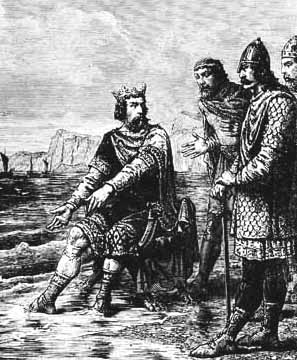
History Trivia - Cnut, king of Denmark, claims the throne of all England

November 30 

1016 Cnut, king of Denmark, claimed the throne of all England after Edmund 'Ironside', king of England, died.

1630 16,000 inhabitants of Venice died this month of plague.


1648 English army captured King Charles I.
 

Wednesday, March 25, 2015

History Trivia - Ptolemy XII, King of Egypt and brother of Cleopatra, drowns in the Nile

March 25

47 BC Ptolemy XII, King of Egypt and brother of Cleopatra, drowned in the Nile, probably with an assist by Julius Caesar, who thereby made Cleopatra queen.

421 City of Venice founded.

1199 Richard I was wounded by a crossbow bolt while fighting France which led to his death on April 6.

Monday, March 24, 2014

History Trivia - City of Venice founded

March 25


47 BC Ptolemy XII, King of Egypt and brother of Cleopatra, drowned in the Nile, probably with an assist by Julius Caesar, who thereby made Cleopatra queen.

421 City of Venice founded.

708 Constantine I began his reign as Catholic Pope.

1199 Richard I was wounded by a crossbow bolt while fighting France which led to his death on April 6.

1306 Robert the Bruce was crowned King of Scotland.
Follow on Bloglovin