Showing posts with label Sparta. Show all posts

Friday, December 4, 2020

The Inspiration behind Gift of the Gods Fire and Ash by Thomas J. Berry


 Five men and women in Ancient Greece are set on a dangerous journey of self-discovery during the bitter conflict of the Peloponnesian War.

While mighty Athens struggles to rebuild after a devastating campaign abroad, the feared warriors of Sparta prepare to deliver the final blow in a decades-long war. No one is safe anymore as the conflict shifts across the Aegean to the shores of wealthy Persia. Old colonies, once loyal to Athens, are eager to rebel and the Great King is willing to pay anything to regain his control over them. These coastal plains set the stage for massive battles and heartbreaking defeats. This time there will be only one true victor.

The news coming out of Sicily ripples across the cities of Ancient Greece like a thunderbolt and it is left to the poor and desperate to pick up the pieces of their shattered lives. One young mother is suddenly faced with a horrible tragedy and struggles against all odds to make a new life for her family. An eager boy looking for adventure enlists in the new Athenian ranks but finds life on campaign a lot more than he bargained for. A Spartan officer in the twilight of his years struggles to adapt to a young man's army and an exiled Athenian strives to earn his way back into the graces of his beloved city. The harem girls in a Persian court meet a handsome foreigner and one risks everything for a chance at love.

As the conflict between Athens and Sparta builds to a final showdown, five men and women struggle to come to terms with their changing world. What will they find in the ashes when peace finally comes?


An Author's Inspiration

Gift of the Gods Fire and Ash

I have enjoyed writing historical fiction novels for many years and like to bring to life interesting stories that will pique someone’s interest. But I never want to be predictable so I adjust my writing styles and points of view for each project.  I’ve penned a real-life murder mystery during the War of 1812 and a grand epic saga during the siege of the Alamo.  Three incredible WWII veterans allowed me to share their marvelous stories during an indelible time in our recent past.  Bolstered by the great reception to these works, I embarked on a new challenge – to write a trilogy of stories around a single conflict in history.  It was a daunting task!  I spent weeks searching for just the right era and moment in time. 

I was first introduced to the Spartans in my teenage years but knew little about them beyond their warrior concept and frugal living standards.  Athens, of course, was home to the philosopher, Socrates, and the famous leader, Pericles.  Large statues and monuments still stand in the Acropolis today where democracy was first born.  Now as I sought the right source material for my trilogy, I took a deep dive into those ancient texts and came away with a passion I never knew I had. 

People of the modern world have almost forgotten about those ancestors of long ago, but I knew it was important to bring them back…and learn from them.  America and Russia have been at odds for over a century now and that inherent conflict is visible in everything we do.  Democracy and socialism were battling each other 2,500 years ago and struggled to overcome the same prejudices that we experience today.  This conflict came to a sudden head during the Peloponnesian War in the 5th century BC, and that is where my story begins…almost.

Some of you may have seen the 2006 movie, 300, with Gerard Butler as King Leonidas of Sparta.  His small group of hearty warriors fought to the death against the great Persian hordes led by Xerxes, their larger-than-life god-king.  The Persians were depicted in the movie almost as one-dimensional monsters while the heroic Spartans gave them a good run for 2 hours before finally succumbing.  It was a great flick – I loved it…except there was more to the story and I knew it was intricately connected to my own, which takes place 50 years afterward.   In order to tell my story on Sparta’s war with Athens, I first needed to set the record straight on this one.


Source: Wikipedia

I invest years of research into my historical novels in order to get the details right.  It’s worth the effort and is a critical part of my writing.  My characters are fully developed people with interesting backgrounds. They have hopes and dreams, insecurities, and strong passions, but most of all, they believe in themselves.  No matter which side of the conflict they are on, they trust that what they are doing in the moment is the proper course of action.  They are not wholly evil or completely angelic.  They are humans and I treat them as such…frailties and all!  Each novel has real historical people within its pages mixing with fictional characters who could easily have lived during that era.  It’s important to note that because my novels examine all sides of the war and from many different angles.  From generals to slaves, widows to bachelors, we see this timeline from many points of view.  That’s the best kind of story to tell – an honest one.

The saga of the Peloponnesian War, fortunately, lent itself to three unique installments and for that, I was grateful.  From beginning to end, it covered a 27-year span, almost three full decades.  The events also shifted locations from Greece to Sicily to Persia – a perfect combination to tell a fast-moving tale in three books.  It was important that each novel in the trilogy could be read as a stand-alone volume.  Therefore, great care was made to isolate the events and characters so their story could be told in a single book.  


The final piece of the writing would be the most challenging of all – trying to tell a complex story over decades of time from many different viewpoints.  The solution was to weave five main characters into a single book and allow their stories to build upon each other like a tapestry.  Iron and Bronze was the first novel in this series and built off the famous battle of King Leonidas at the Thermopylae Pass.  We see Kalli, a young widow intent on training her son for Olympic boxing…and finding herself in over her head.  Doro is a wealthy aristocrat from Athens whose life comes crashing down around him when the war begins.  Matty is a helot slave in Sparta and risks everything for a new life.  Marching alongside these characters are the two emerging superpowers of the day.  Sparta and its mighty soldiers with a fearsome reputation, find themselves pitted against Athens who sails the strongest navy the world has ever seen. 


The second novel, Silver and Gold, continues the saga after peace is finally declared, but much like America and Russia today, tensions seethe just below the surface.  Alcibiades, a charismatic Athenian general, brings the conflict to a new level when he sets his eye on conquering the colonies on Sicily and the entire Mediterranean coastline.  No one is safe anymore and the Spartans set sail to this far-off land in a desperate bid to stop him.  Does anyone remember Vietnam in the 60’s and 70’s?   Two global powers battling it out far from home with everything at stake.  Andreas, a Spartan officer of mixed parentage, must overcome his lowly status to help the Sicilians defend against this invading armada or die trying.  Cathryn is a young mother native to the island and sees her world turned upside down by the rising conflict.  Kyril, a boxing prodigy who fought in the Delian Games, joins the powerful Athenian fleet only to discover the awful truth hidden beyond the horizon.
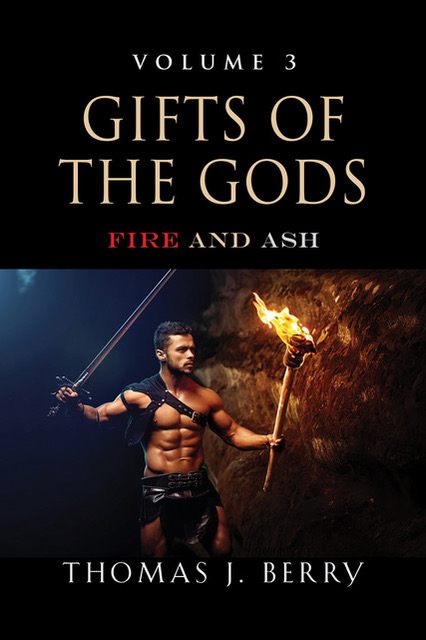

This last adventure, Fire and Ash, brings the war to a dramatic conclusion as Sparta seeks to cut Athens off from its rich colonies on the Persian coast.  Some of the war’s biggest naval battles are fought off the shores where Xerxes once called home and the irony is not lost on them as both sides now seek to make an alliance with their former adversary.  Memo, an Athenian officer living in exile looks to find a way back into the graces of his beloved city while Aleki, an older Spartan officer, struggles to adapt in a young man’s army.  Timandra, an exotic dancer in a Persian court, finds love with a handsome foreigner and risks everything to keep him safe.  In the end, only one city will reign supreme over the Ancient world and the struggle between democracy and socialism will finally be decided.

It is my fervent hope that readers will not only find enjoyment in these pages but learn something new as well.  These are types of books I’ve always enjoyed myself and I know there is a strong audience for them.  Remember, if we can learn the past, we can shape a better future for ourselves!

Buy Links

Amazon UKAmazon USAmazon CAAmazon AUBookLocker

About the Author

Thomas J. Berry

Thomas Berry received a Bachelor of Arts degree in Philosophy from St. Bonaventure University.  He takes pleasure in extensively researching both historical fiction and non-fiction stories.  In his spare time, he enjoys long-distance running and has completed several marathons.  He currently lives with his wife and children in New Jersey.  You can learn more about Thomas and his historical novels on his website, www.thomas-berry.com.

Connect with the Author

TwitterInstagramGoodreads


Thursday, March 1, 2018

After 300: The Posthumous Vengeance of King Leonidas of Sparta

Ancient Origins


After 300: The Posthumous Vengeance of King Leonidas of Sparta

 Mythologically descended from the hero Herakles, the Agiad dynasty of ancient Sparta reigned alongside the Eurypontids almost since the beginning of the city-state. When war was on the borders of their land, and that of their neighboring city-states, it was to the current Heraklean descendent that those city-states turned. Even the Athenians, who were long-time rivals of the Spartan warriors looked to the current Agiad king for guidance in the darkest time of the war. That king, unsurprisingly, was King Leonidas I. A

King Amongst Kings
The better remembered of the two warrior-kings of the ancient Greek city-state Sparta, King Leonidas I lived and ruled between the 6th and 5th centuries BC. His time on the throne was short-lived, but his legacy has lasted lifetimes. Leonidas is the king who many other kings aspire to emulate; King Leonidas gave everything to defend and protect his homeland. Called upon to lead the allied forces of the Greek city-states based on his military record alone, it is said that King Leonidas tried to protect his soldiers, ordering them to leave the battlefield to fight another day. They did not, as one might guess, as they were Spartans; one way or another, Spartans return from battle—either with their swords, or on them, as the saying goes. Leonidas' words of protection at the battle of Thermopylae fell on deaf ears, and the Greeks were slaughtered that fateful day in 480 BC


Leonidas at Thermopylae by Jacques-Louis David (Public Domain)

What happened after the massacre, however? What happened after the death of the one of the greatest military leaders? Without Leonidas, Sparta was down one king; it had been tradition for two kings to rule the city-state, one from each of the two primary families, the Agiads and the Eurypontids. With his death at the hands of the army of Xerxes, king of Persia, and his head paraded around on a spike, Sparta was left short-handed. What was the next step?

Revenge.


Leonidas I of Sparta (CC BY-SA 4.0)

Wrath of the Gods
If one believes in the ancient Greek gods—as the city-states clearly did—it is impossible not to see the vengeance those gods encouraged through their mortal soldiers following the death of Herakles' descendent. With the death of King Leonidas and the insult to his person, the Persians had essentially painted a bright red, divinely taunting target on their backs. Over the next year, the Persians and Greeks engaged in their final land and sea battles, of which the Persians suffered as often as not. Salamis and Plataea, two of the most decisive Greek victories, officially turned the tide in favor of the Greeks. In fact, a better vengeance could not have been written for King Leonidas. The Greeks, who had not forgotten the slaughter of Thermopylae, returned the favor in spades at the Battle of Plataea.


A romantic version painting of the Battle of Salamis by artist Wilhelm von Kaulbach. (Public Domain)

The ancient historian Herodotus (5th century BC) is one of the primary sources of this battle. Following a stalemate around the Persian camp constructed in Plataea, the Persians were unintentionally (though it was lucky for the Greeks) lulled into a sense of victory. Having cut off the Greeks from their supply lines, the Persians believed the few Greeks who retreated to regain those connections represented the whole army; the subsequent Persian attack quickly proved them wrong. The Greek allies literally had the high ground, and a defeat of those Persian forces, led by Mardonius, was relatively swift. The Greek forces then, loosely interpreted from ancient texts, exacted their revenge for the slaughter of Leonidas and his men by massacring the Persian camp at Plataea. Later that afternoon, the Greeks finished the job at the final battle of Mycale.


King Leonidas I Monument at Thermopyles. (CC BY-SA 3.0)

Exacting Revenge
One could attribute this "retribution" as constructed by King Leonidas' son Pleistarchus, intended to take the throne upon Leonidas' death. Yet in an interesting turn of events, Pleistarchus was too young to rule at his father's death, and the boy's guardian Pausanias, was actually on the second Spartan throne. Thus the decisive, somewhat brutal, actions against the Persians at Plataea and Mycale may or may not have been an act of vengeance in the name of the father Leonidas, but were almost certainly for the Herculean general who sacrificed everything for his home, and the homes of those allied with him. (One should remember that Sparta and Athens were only on good terms when they were teamed up against Persia. They placed their animosities aside during the Persian War, Athenians willingly following Spartans, and Spartans trusting to delegate to Athenians. This alliance would crumble soon after the war, but Leonidas' actions are even more inspiring for the prejudices put aside.)


Greek and Persian warriors depicted fighting on an ancient kylix. 5th century BC. (Public Domain)

United States of Leonidas
King Leonidas' sacrifice might not have resulted in the battle to end all Persian-Greek battles, however it did inspire a great deal of "nationality", a concept not yet fully formed in the ancient world. Yet the Greek city-states saw a common enemy, and shared a common goal, and for a brief period of time, respected and valued the same man—homeland and culture aside. The increased sense of unity Leonidas inadvertently forged between the Spartans, Thebans, Athenians, etc. led to an increased determination; the Greeks left no man standing at Plataea and Mycale if they could find one. The victory of the Greeks over the Persians resonated for centuries, and Leonidas' name is remembered far better than those of the men who returned home with their shields rather than on them. Because of this (and the later cockiness of the Athenians), the Spartans and their allies successfully defeated the Athenians in the Peloponnesian War, the next great battle on their horizon.

Top image: King Leonidas by David Baldo (deviantart)

By Riley Winters

Sunday, February 25, 2018

What did the ancient Greeks do for us?


History Extra


The first is that it is not only thanks to the Greeks that our culture is so infused with theirs. Just because they invented and built things does not mean, by right, that those inventions, ideas and creations will always continue to be admired. It’s in the way that the legacies of ancient Greece have been taken up, admired, re-formulated and manipulated by every culture between theirs and ours, that we must also look for our answer to the question of why we are so indebted to the Greeks in particular.

 For example, the Roman emperor Hadrian loved all things Greek: he completed the temple of Olympian Zeus in Athens, despite the fact that no Greek had been able to complete this massive temple in about 650 years of trying. The emperor had created a legacy that, in truth, augmented the reality of what the Greek world actually achieved.

The second idea is that, in that continual process of reformulation and manipulation, we have on occasion completely misinterpreted the ancient Greek world. Take paint for instance. Our very sense of the ‘Classical’ from the Renaissance onwards, has been based on the ‘fact’ that ancient Greek temples and buildings were made out of marble and stood shining off-white in the sunlight.

But ever since the first modern travellers visited Greece in the 17th century, we have discovered evidence that this is, in fact, completely wrong. Greek temples were painted bright blue, red, green: our very definition of the opposite of Classical! And so strongly implanted in our cultural psyche is this – incorrect – understanding of the Classical world, that even today we find it difficult to accept what the reality actually was.


Thirdly, we need to realise that the ancient Greek world has not always been such a source of inspiration and, equally, that it has not always been a source of inspiration for things we would choose to admire now.

By the seventh century AD, for example, the term ‘democracy’ had a ‘mob-rule’ feel about it, which made ancient Athens a very unpopular model for any society, right through until the until the late 18th century. In the English Civil War, for instance, Cromwell was encouraged to follow the example of the ancient Spartans, not the Athenians.

In the formulation of the constitution of the US in the 18th century, the Roman model of a Senate and Capitol was followed, rather than the Athenian boule (a council of citizens appointed to run the daily affairs of the city) and ekklesia (the principal assembly of the democracy of ancient Athens). More worryingly, the same Spartan model that was urged on Cromwell was the model taken by the Nazis as the way to create an Aryan race; Nazi youth camps were directly modelled on the training system for young Spartans.

Finally, although we may like to think that we have taken the inventions and ideas of the ancient Greeks and improved upon them, this is not always the case.

Take ancient Athenian democracy, again, as an example. In ancient Greece, this was based on slavery, and excluded women. Today, we rightly pride ourselves on the fact that neither of these is true. We have improved on the original Greek legacy to the degree that some argue we should not call their system a democracy at all. But equally, we must remember that the ancient Greeks probably would not call our system much of a real democracy either!

We have a representative democracy with a very apathetic voter turn-out at elections; they had a system where every citizen voted directly on every major issue, and in which approximately two-thirds of the citizen population sat, at some point in their adult lives, on the supreme governing council, the boule, of the city. None of this makes the Athenian system better than ours or vice versa. But it should make us think twice about we mean by the ‘legacy’ of democracy.

Overall, the crucial thing we must always remember is that the legacy of the ancient Greeks is a constantly moveable feast, caught between icon and enigma, and one that we – alongside every generation between us and them – have been, are still, and will always be, absolutely implicit in creating as much as the ancient Greeks themselves.

Michael Scott is the author of several books on ancient Greek and Roman society and has presented numerous TV documentaries on ancient history.

Monday, March 28, 2016

Goths vs. Greeks: Epic Ancient Battle Revealed in Newfound Text

Live Science


Wednesday, November 18, 2015

Researchers locate Submerged Lost Ancient City where Athens and Sparta Fought a Battle

Ancient Origins

Researchers have found the location of the lost island city of Kane, known since ancient times as the site of a naval battle between Athens and Sparta in which the Athenians were victorious but later executed six out of eight of their own commanders for failing to aid the wounded and bury the dead.
Some historians say the loss of leadership may have contributed to Athens’ loss of the Peloponnesian War. But a scholar who wrote a book on the battle says the Spartans would have won whether or not Athens executed the generals.
The ancient city of Kane was on one of three Arginus Islands in the Aegean Sea off the west coast of Turkey. The exact location of the city was lost in antiquity because earth and silt displaced the water and connected the island to the mainland.
Geo-archaeologists working with other experts from Turkish and German institutions discovered Kane, where the Athens and Sparta did battle in 406 BC. Athens won the Battle of Arginusae, but its citizens tried and executed six of eight of the city-state’s victorious commanders.
Depiction of a battle between Athens and Sparta in the Great Peloponnese War, 413 BC.
Depiction of a battle between Athens and Sparta in the Great Peloponnese War, 413 BC. (Image source)
 “The Athenian people soon regretted their decision, but it was too late,” writes J. Rickard at History of War. “The execution of six victorious generals had a double effective—it removed most of the most able and experienced commanders, and it discouraged the survivors from taking command in the following year. This lack of experience may have played a part in the crushing Athenian defeat at Aegospotami that effectively ended the war.”
Debra Hamel, a classicist and historian who wrote the book The Battle of Arginusae, however, says she thinks Athens would have lost anyway.
“Sparta at that point was being funded by Persia, so they could replace ships and hire rowers indefinitely,” Dr. Hamel wrote to Ancient Origins in electronic messages. “Athens did not have those resources. Allies had revolted. They weren’t taking in the money they had in earlier days.”
Google Earth image shows the general vicinity of the islands, near Bademli Village in Turkey on the Aegean Sea.
Dr. Hamel, via e-mail, describes how the Battle of Arginusae was likely fought:
The Battle of Arginusae was only fought at sea. …  The state-of-the-art vessel of the period was the trireme, a narrow ship about 120 feet [36.6 meters] long that was powered by 170 oarsmen, who sat in three rows on either side of the ship. There was a bronze-clad ram that extended about six and a half feet [2 meters] at waterline from the prow of the vessel. The purpose of the ram was to sink enemy ships. The goal of a ship's crew—the 170 oarsmen and various officers onboard—was to maneuver a trireme so that it was in position to punch a hole in the side of an enemy ship while avoiding getting rammed oneself. In order to do this you needed to have a fast ship--one that wasn't waterlogged or weighed down by marine growths--and you needed a well-trained crew.
Athens sent 150 ships, the Spartans 120. The Athenian line was about 2 miles (3.2 kilometers) long or longer because it was interrupted by one of the Arginusae islands. The Spartan line was a bit less than 1.5 miles [2.4 km] long, Dr. Hamel estimates.
Greek trireme, drawing by F. Mitchell; note the battering ram on the prow to the right at the waterline.
Greek trireme, drawing by F. Mitchell; note the battering ram on the prow to the right at the waterline. (Wikimedia Commons)
Dr. Hamel’s book on the battle explores not just the battle but its aftermath too. Winning the battle “was a great triumph, saving Athens—at least temporarily—from almost certain defeat in the war,” she wrote in e-mail. “The victory was cause for celebration, but paradoxically, because of what happened afterwards, it was also one of the worst disasters to befall Athens in the war: A series of legal proceedings led ultimately to the Athenians' execution of (most of) their victorious generals. This was the stuff of tragedy.
Because the Battle of Arginusae is tied intimately with the legal proceedings that it led to, I was able to discuss in my book not only the battle itself and the intricacies of naval warfare (which are really very interesting), but also the proceedings back in Athens and Athens' democracy and democratic institutions. All of this was necessary to round out the story for readers who are approaching the book without any prior knowledge of the period.
Later, from 191 to 190 BC, Roman forces used the city of Kane’s harbor in the war against Antiochas III’s Seleucid Empire. That war lasted from 192 to 188 BC and ended when Antiochus capitulated to Rome’s condition that he evacuate Asia Minor. Most of Antiochus’ cities in Asia Minor had been conquered by the Romans anyway. He also agreed to pay 15,000 Euboeic talents. The Romans did not leave a garrison in Asia Minor but wanted a buffer zone on their eastern frontier.
The island on which Kane was situated, which is known from ancient historians’ texts, is in the sea off İzmir Province’s Dikili district Researchers, led by the German Archaeology Institute, included those from the cities of İzmir, Munich, Kiel, Cologne, Karlsruhe, Southampton and Rostock. Prehistorians, geographers, geophysics experts and topographers all worked on the project.
“During surface surveys carried out near Dikili’s Bademli village, geo-archaeologists examined samples from the underground layers and learned one of the peninsulas there was in fact an island in the ancient era, and its distance from the mainland was filled with alluviums over time,” reports Hurriyet Daily News. “Following the works, the quality of the harbors in the ancient city of Kane was revealed. Also, the location of the third island, which was lost, has been identified.”
Featured image: Main: Google Earth image shows the general vicinity of the islands, near Bademli Village in Turkey on the Aegean Sea. Inset: A representation of an ancient Greek ship on pottery (Photo by Poecus/Wikimedia Commons)
By Mark Miller

Thursday, October 29, 2015

Were there really only 300 Spartans at the Battle of Thermopylae?

History Extra


It is considered a heroic last stand by King Leonidas of Sparta and his tiny number of brave warriors against an army of a supposed million soldiers.
This article was first published in March 2014

King Leonidas sculpture in Thermopylae © Santiago Rodríguez Fontoba | Dreamstime.com

Last week saw the release of 300: Rise of an Empire, the sequel to the muscle-rippling, blood-splattering, historically-dodgy 300 – which told the fantastical story of the Battle of Thermopylae in 480 BC, when a handful of Spartans fought the entirety of Persia’s armies for three days. But was it as one-sided as the legend suggests?
In short, not as much as suggested. It is true there were only 300 Spartan soldiers at the Battle of Thermopylae but they were not alone, as the Spartans had formed an alliance with other Greek states. It is thought that the number of Greeks was closer to 7,000. The size of the Persian army is disputed. 5th-century Herodotus claimed there were over two million but it was more likely to be between 100,000 and 300,000, so the Greeks were still against overwhelming odds.
With this huge army, Xerxes I of Persia was intent on invading and conquering all of Greece, but King Leonidas of Sparta met him at the narrow coastal pass of Thermopylae, known as the Hot Gates, where Persia’s superior numbers counted for nothing. A messenger threatened a Spartan general saying, “Our arrows will block out the Sun”, to which the general replied, “Then we will fight in the shade.” Leonidas’ forces held off the Persians for two full days.
The Spartans were brutal warriors, raised never to surrender or show weakness. When a Persian ambassador ordered the Greeks to lay down their weapons, Leonidas hit back with, “Come and take them”.
A Greek called Ephialtes betrayed his country by revealing a path to the Persians that allowed them to outflank Leonidas. The Spartan King dismissed most of the army and formed a rear-guard of around 1,500 men, including his 300 Spartans, 700 Thespians, 400 Thebans and a few hundred others, many of them slaves. They were wiped out but this sacrifice allowed the bulk of the army to retreat and regroup.
Xerxes’ invasion ended in failure as the Greeks won decisive victories at the Battles of Salamis and Plataea.

Thursday, August 27, 2015

Archaeologists discover Mycenaean palace and treasure trove of artifacts in southern Greece

Ancient Origins

Greek archaeologists have discovered a pre-classical era Greek palace at Aghios Vassilios hill dating from the Mycenaean Age, which some researchers believe is the long-lost palace of Sparta. Important archaic inscriptions found at the site may help to shed light on the political, administrative, economic and societal organisation of the Mycenaean society around Sparta where the discovery was made.
The Greek Culture Ministry said that the palace, which had around 10 rooms, was probably built around the 17th to 16th centuries BC, in a statement reported by the Phys.org website. The archaeologists also discovered a number of important artifacts at the site, including objects used for religious ceremonies, clay figurines, a cup adorned with a bull’s head, swords and fragments of murals.
New excavations at a site near historical Sparta may have uncovered the lost ruins of a Mycenaean Spartan palace. Among the treasures found at the site was this bull's head.
New excavations at a site near historical Sparta may have uncovered the lost ruins of a Mycenaean Spartan palace. Among the treasures found at the site was this bull's head. Credit: Greek Ministry of Culture
Excavations in the area, conducted since 2009, have revealed inscriptions on tablets, written in the Linear B script, relating to religious practices and also names and places. Linear B is the oldest script to be discovered in Europe and first appears in the historical timeline in Crete from around 1375 BC. It took until the mid-20th century for experts to decipher it properly.
The palace was probably destroyed by fire at some point in the late 14th or early 13th century, according to available evidence.
A photo released by the Greek Ministry of Culture on Aug. 25 shows an excavation site near Sparta in the Peloponnese region with remains of a palace of the Mycenaean period.
The Mycenaean era was the last phase of the Bronze Age in Ancient Greece and is characterised by palatial city-states, works of art and writing. It was at this time that the city-states began to become established, including Pylos, Tiryns, Midea in the Peloponnese, Orchomenos, Thebes, Athens and Iolcos in Thessaly. The most prominent of them was Mycenae in Argolid which was the influence for other settlements in Epirus, Macedonia and on islands in the Aegean Sea, on the coast of Asia Minor, the Levant and in Cyprus and Italy. Mycenaean Greece collapsed at the end of the Bronze Age and the most popular theory concerning its demise places the blame of the mysterious ‘people of the sea’ (or Sea Peoples). Other theories focus on the Dorian invasion or on natural disasters and climate change. Much ancient Greek literature is based on heroes and deities from the Mycenaean era, the most notable of which is the Trojan Epic Cycle.
Homer writes that the Mycenaean era was dedicated to Agamemnon, the king who led the Greeks in the Trojan War. The Mycenaean’s were keen traders, establishing contacts with countries across the Mediterranean and Europe. They were also excellent engineers and are also known for their characteristic ‘beehive’ tombs which were circular in shape with a high roof, consisting of a single stone passage leading to a chamber in which the possessions of the tomb’s occupant were also laid to rest.
Grave circle and main entrance of the citadel at Mycenae, one of the major centres of the Mycenaean civilization.
Grave circle and main entrance of the citadel at Mycenae, one of the major centres of the Mycenaean civilization. (Wikipedia)
Mycenaean craftsmen produced distinctive items of pottery and bronze, as well as carved gems, jewellery, vases made from precious metals and glass ornaments. Oil and wine were among the major commodities traded by them.
Not much is known about the religious practices of the time, but it is likely that the Mycenaean’s practiced ritual animal sacrifice and enjoyed communal feasting. Images of the double axe in art suggest links with the Cretan Minoan culture. Robert Graves also drew much of his inspiration for his books on the Greek Myths, and later on The White Goddess, from the Mycenaean culture, casting a more romantic slight on the period. It was during this period that the tales of deities such as Dionysus, Hephaestus, Poseidon, Artemis, Hera and Potnia began to emerge. The later Greeks regarded many of the deities in the Mycenaean pantheon more as heroes or demi-gods rather than powerful gods and goddesses in themselves and so undoubtedly there were many interesting tales that were lost to history as a result.
"Tradition tells us that Sparta was an important site in the Mycenaean period," Hal Haskell, an archeologist who studies the ancient Mycenaean culture at Southwestern University in Georgetown, Texas, told Live Science. Yet no palace had been unearthed in the Spartan plain. Haskell believes the new site could be that lost Spartan palace.
Featured image: A handout photo released by the Greek Ministry of Culture shows the excavations site with remains of a palace of the Mycenaean period, bearing important inscriptions in archaic Greek, discovered near Sparta in the Peloponnese region of Greece. Image credits: Greek Ministry of Culture
By Robin Whitlock

Wednesday, August 26, 2015

Archaeologists Unearth Ancient Greek Palace Near Sparta

A photo released by the Greek Ministry of Culture on August 25, 2015 shows an excavations site near Sparta in the Peloponnese region with remains of a palace of the Mycenaean period.
Greek Ministry of Culture 


Archaeologists in Greece have discovered the ruins of an ancient palace with important archaic inscriptions dating back to the Mycenaean Age, the culture ministry said Tuesday.
The palace, likely built around the 17th-16th centuries BC, had around 10 rooms and was discovered near Sparta in southern Greece.
Photos: Greek God Hermes Featured in Ancient Mosaic
At the site, archaeologists found objects of worship, clay figurines, a cup adorned with a bull’s head, swords and fragments of murals.
Since 2009, excavations in the area have unearthed inscriptions on tablets detailing religious ceremonies and names and places in a script called Linear B, the oldest script to be discovered in Europe. It first appears in Crete from around 1375 BC and was only deciphered in the mid 20th century.
Ancient Greeks Used Portable Grills at Their Picnics
The new discovery will allow for more research on the “political, administrative, economic and societal organization of the region”, and provide “new information on the beliefs and language systems of the Mycenean people,” the ministry said in a statement.
According to the culture ministry, more than 150 archaeological excavations were have been carried out in Greece so far this year, “demonstrating the importance of the archaeological wealth and cultural heritage of the country.”

Monday, July 13, 2015

Why we say: 'Beware the Greeks bearing gifts'

 
The military tactic, the Trojan Horse, was portrayed in the 2004 blockbuster Troy © Mg1408 | Dreamstime.com
The phrase is used to warn against possible deception by an adversary, but where does it originate?

For ten years, the city of Troy had been under siege from the armies of Greece, after the Trojan prince Paris eloped with - the wife of Menelaus, King of Sparta. Or at least, that’s the myth.
Thousands had died in the decade-long war but the stone walls of Troy remained impenetrable. With the two sides at stalemate, the Greek warrior king Odysseus hatched a cunning plan.
A giant wooden horse was built and left at the gates of Troy and the Greek ships sailed out of sight. The Trojans, believing the war was over, saw the horse as an offering to the gods and as a gift of peace so wheeled it into the city and celebrated their victory. This is exactly what Odysseus wanted – once the Trojans had all gone to sleep – many of them blind drunk – a host of armed soldiers crept out from the belly of the horse and opened the city gates. Troy was overrun and destroyed and the ‘Trojan Horse’ became revered as one of the most successful military tactics ever.
In Virgil’s epochal version of events, Aeneid, there was one voice of reason among the Trojans who distrusted the Greeks. A priest named Laocoon pleaded against accepting the gift and bringing the horse into the city, declaring, “Timeo Danaos et dona ferentes” – roughly translated, as “I fear the Greeks, even those bearing gifts.” It was adapted over the years to the expression we have today.
But, as the story goes, Laocoon and his sons were strangled by two large serpents, sent by the gods. The Trojans saw this as a sign that the priest was wrong, and the horse was a sincere gesture of peace.

History Extra

Saturday, April 25, 2015

History Trivia - Athens surrenders to Sparta

April 25

404 BC Athens surrendered to Sparta, ending the Peloponesian War.  

799 Pope Leo III was attacked during a procession in Rome due, in part, for recognizing Charlemagne as patricius of the Romans, which upset the delicate balance between the Byzantines and the west that his predecessor had established. He fled to Charlemagne, who escorted the Pope  safely back to Rome where he oversaw a commission that vindicated Leo and deported his enemies. Leo would later crown Charlemagne the first Holy Roman Emperor